Our Services

Prescott Valley Commercial Roofing Services

Our commercial roofing services in Prescott Valley cover five coating systems. The right one depends on the roof surface, how it drains, and who walks on it.

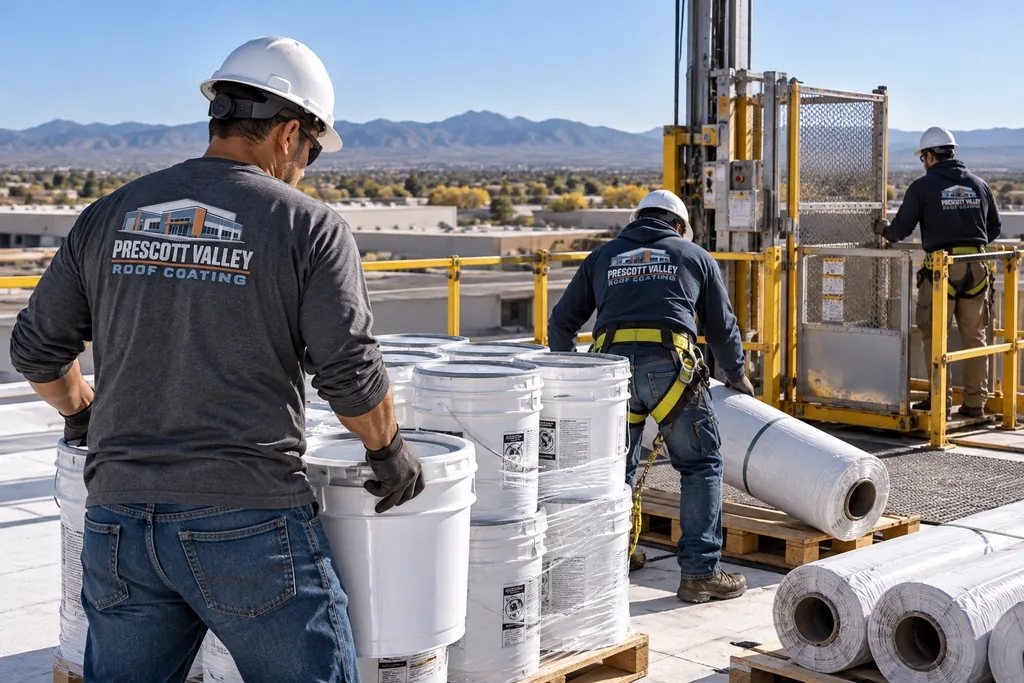
Roofing crew staging materials beside a lift on a commercial roof
Five Systems

Five Coating Systems For Five Kinds Of Roof

Each card names the roof the system fits best. Follow a card for the prep steps, limits, and questions that go with that system.

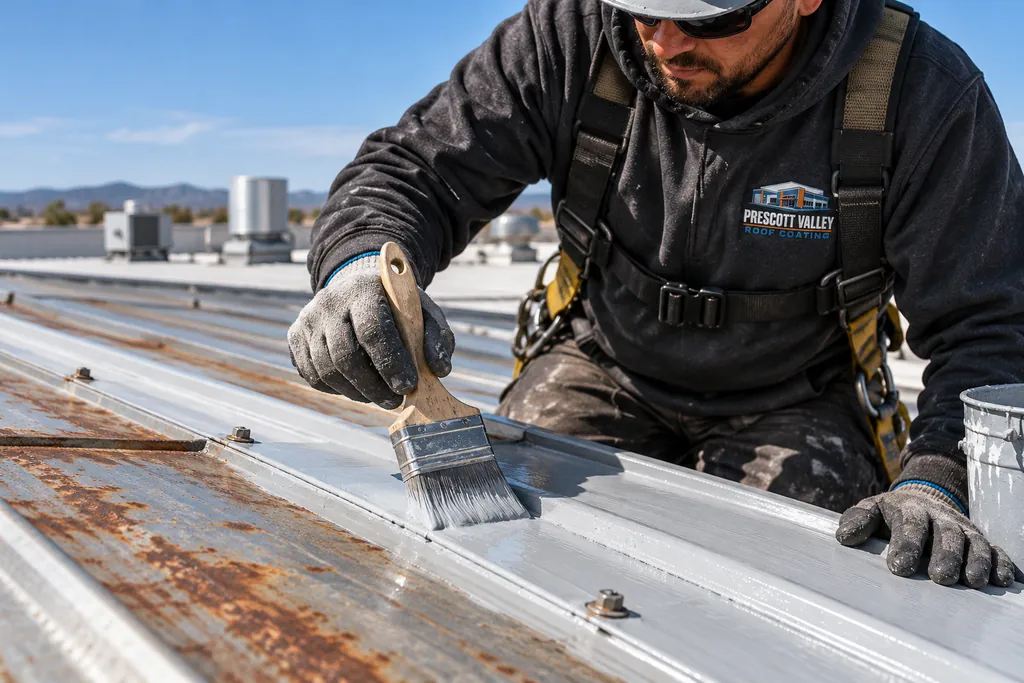
Roofer applying primer along a prepared metal roof panel lap

Metal Roof Coating

Exposed-fastener metal panels on shops, warehouses, and hangar-style buildings. Screws and laps are sealed and rust is primed before the coating goes on, so winter meltwater has no open path at the fasteners.

Best for: metal buildings with surface rust and loose fasteners

Metal roof coating in Prescott Valley
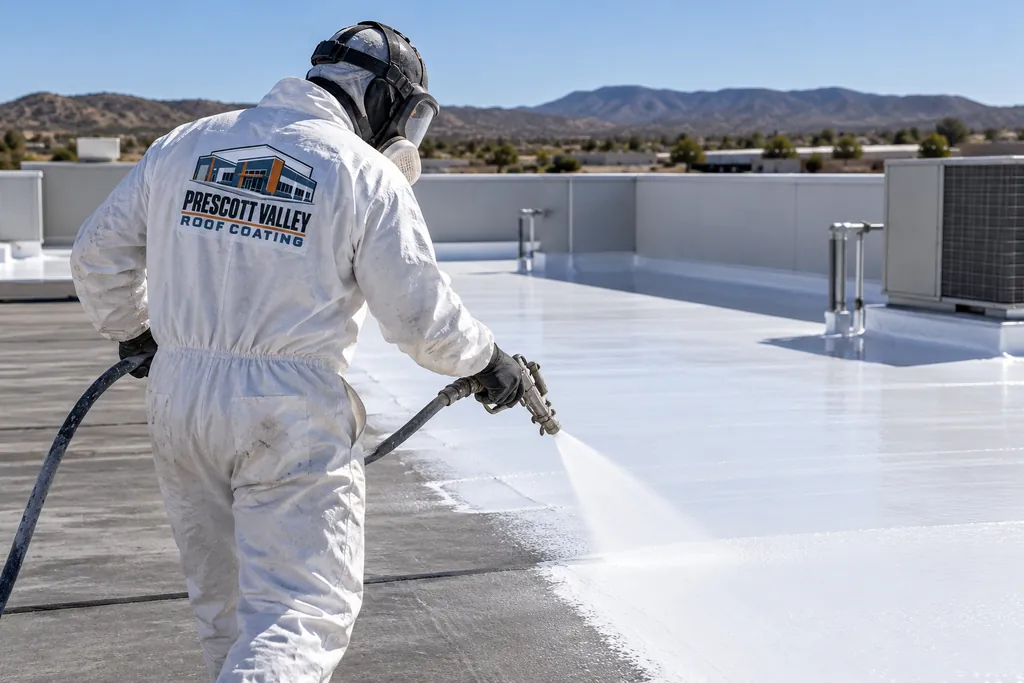
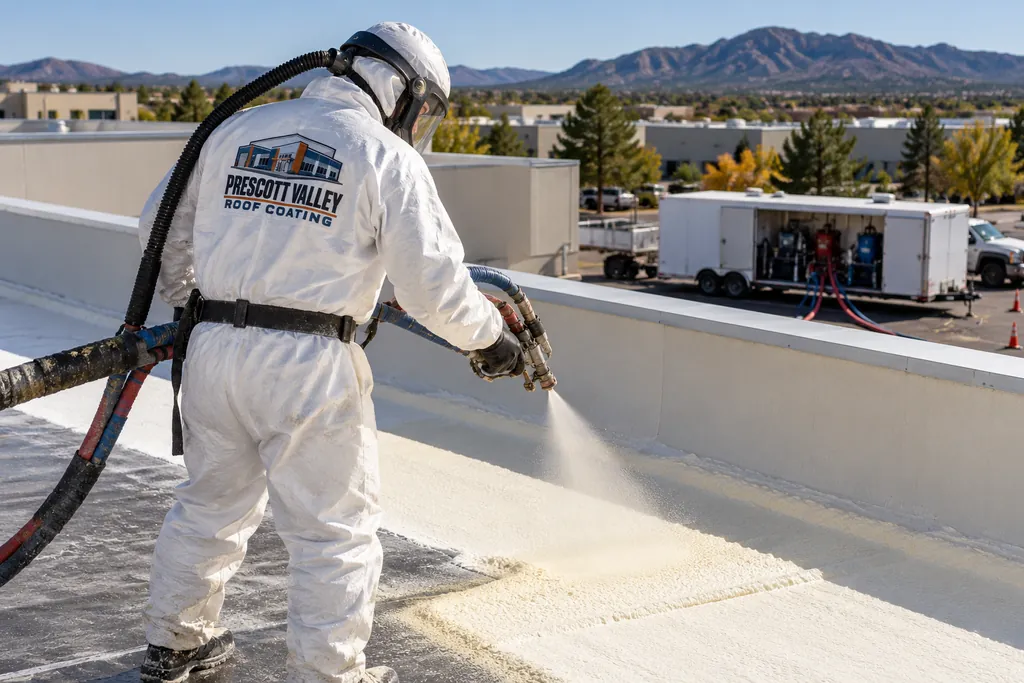
Applicator spraying white silicone coating on a commercial roof

Silicone Roof Coating

Low-slope built-up, modified bitumen, and single-ply roofs. Silicone tolerates water that lingers near drains after snowmelt, and it recoats with more silicone when it wears.

Best for: flat roofs with slow drainage

Silicone roof coating in Prescott Valley
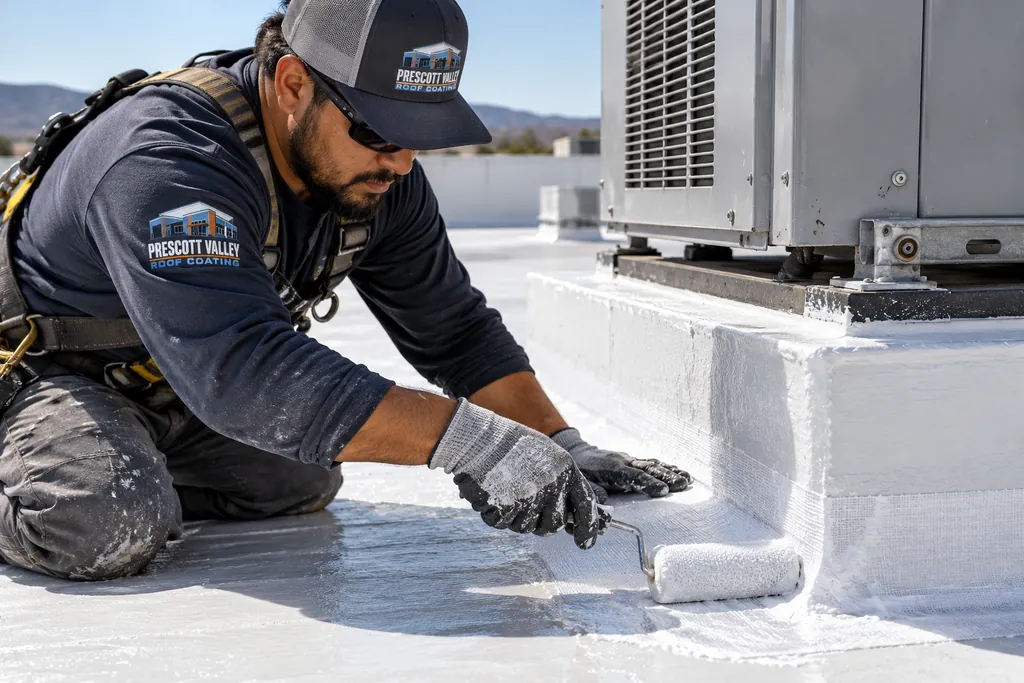
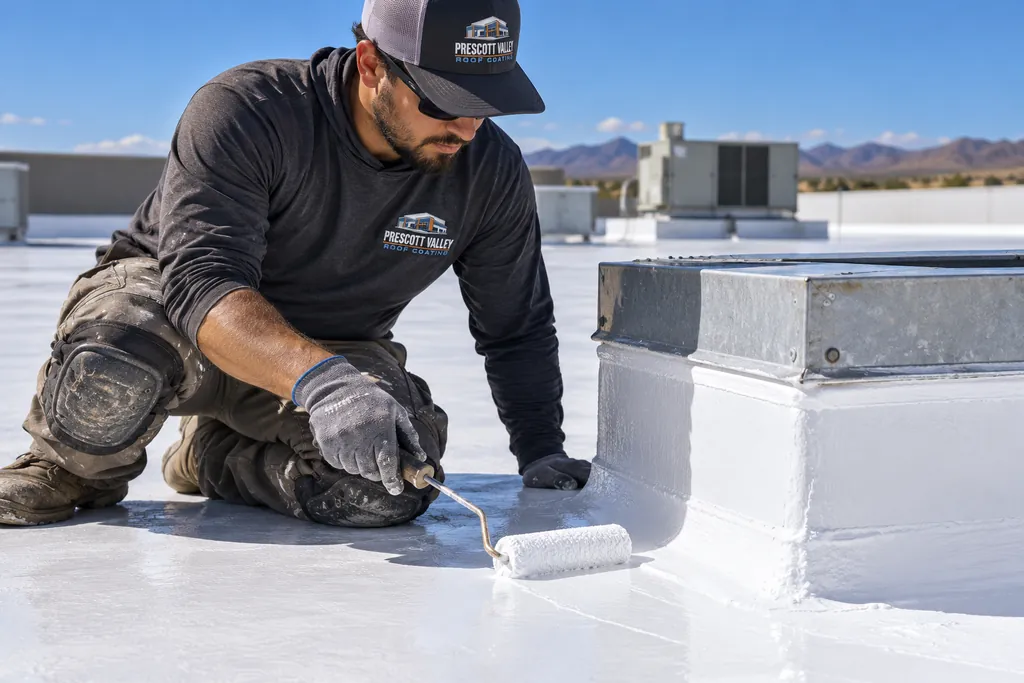
Worker rolling white acrylic coating around a rooftop curb

Acrylic Roof Coating

A water-based white coating for roofs that shed water well. It goes on in warm, dry weather between late spring and early fall, and it recoats easily years later.

Best for: well-drained roofs on a tighter budget

Acrylic roof coating in Prescott Valley
Protected applicator installing spray foam roofing

Spray Foam Roofing

Sprayed foam builds a new insulated layer over a dry existing roof, fills shallow low spots, then gets a protective topcoat against UV and hail.

Best for: roofs that need insulation and low spots filled

Spray foam roofing in Prescott Valley
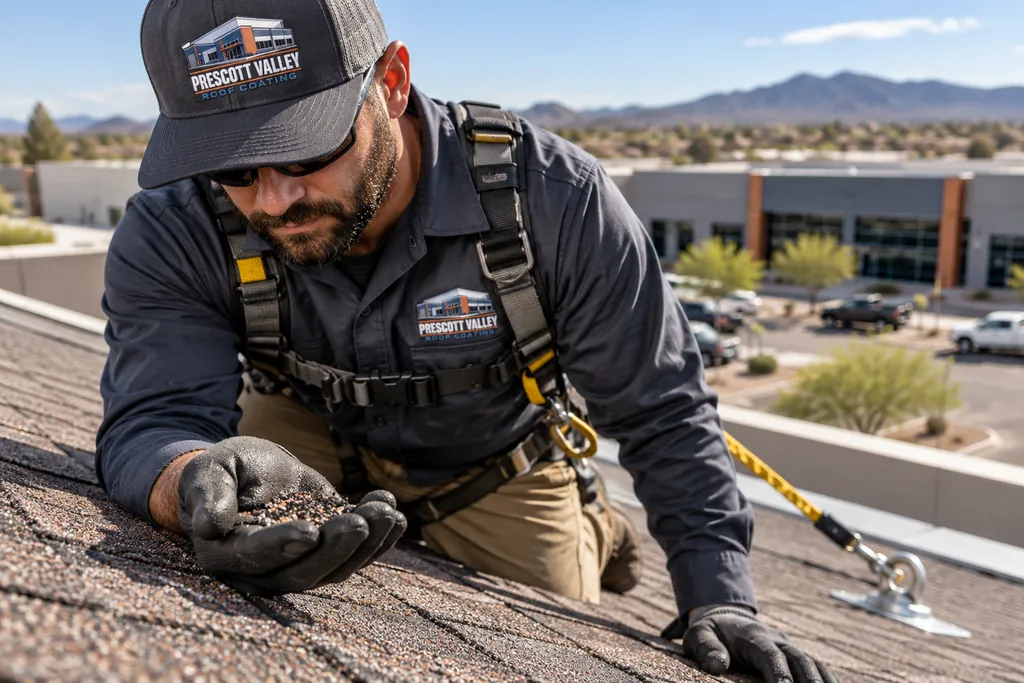
Inspector examining loose granules from a commercial shingle roof

Shingle Roof Coating

Pitched commercial shingle roofs checked against the shingle maker's guidance. Coating goes ahead only when granules and tabs pass inspection, and we say so plainly when replacement fits better.

Best for: shingle roofs with light, even wear

Shingle roof coating in Prescott Valley
Side By Side

Matching A Coating To Your Roof System

Drainage, foot traffic, and the existing surface narrow the choice. The inspection settles it.

SystemBest existing surfaceStanding waterFoot traffic and hailRecoat path
Metal coatingExposed-fastener or standing-seam metal panelsSlope sheds water; gutters and valleys matter mostModerate; add walk pads at rooftop unitsClean and recoat with a compatible coating
SiliconeBuilt-up, modified bitumen, single-ply, or foamRated for ponding waterModerate; slick when wet or frostedRecoat with silicone only
AcrylicWell-drained built-up, metal, or foamBreaks down where water sitsLight trafficRecoat with acrylic over a clean surface
Spray foamA dry existing roof of most typesFoam can be built up to fill low spotsThicker topcoat where hail hitsClean and recoat the topcoat
Shingle coatingAsphalt shingles with granules intactPitch carries water offStay off once coatedRecoat with the same product line

Polyurethane base or top coats are an option inside these systems where foot traffic or hail exposure is heavy.

System Questions

Not Sure What Your Roof Is Made Of?

Call and describe what you see from the roof hatch: gravel, a smooth sheet, metal ribs, or foam. That usually narrows the systems down to one or two.

(928) 436-4811
Every System

From First Walk To Final Coat

The steps stay the same whichever system the roof gets. Only the materials in steps three and four change.

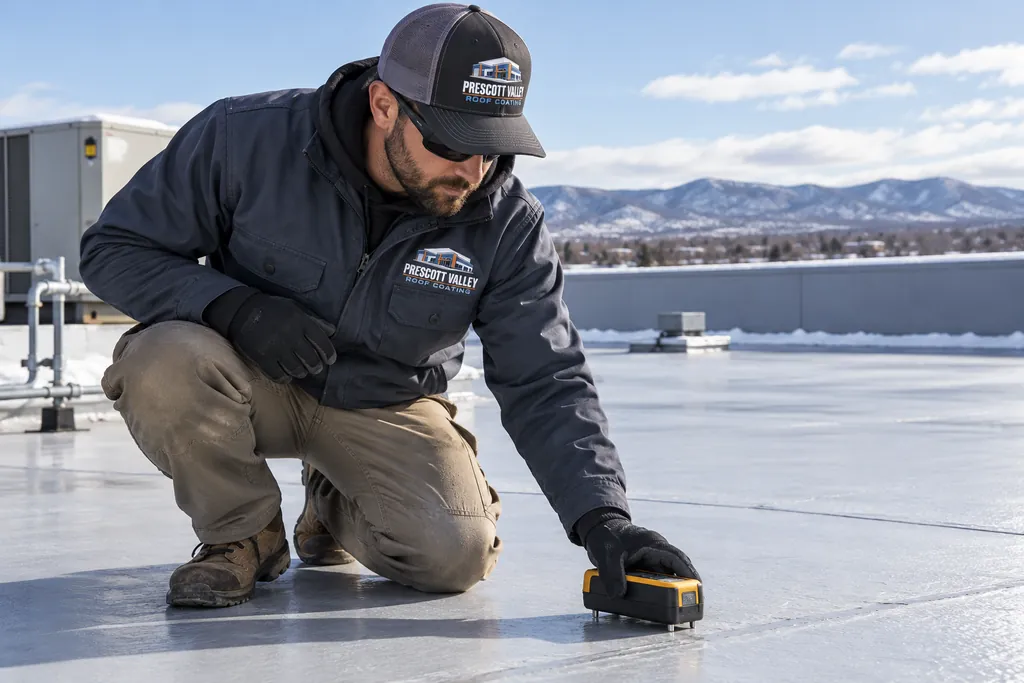
  1. Inspector checking a commercial roof with a moisture meter

    Inspect Your Roof

    Core cuts tell us what the roof is made of and how many layers sit on the deck. That answer decides which systems stay on the table.

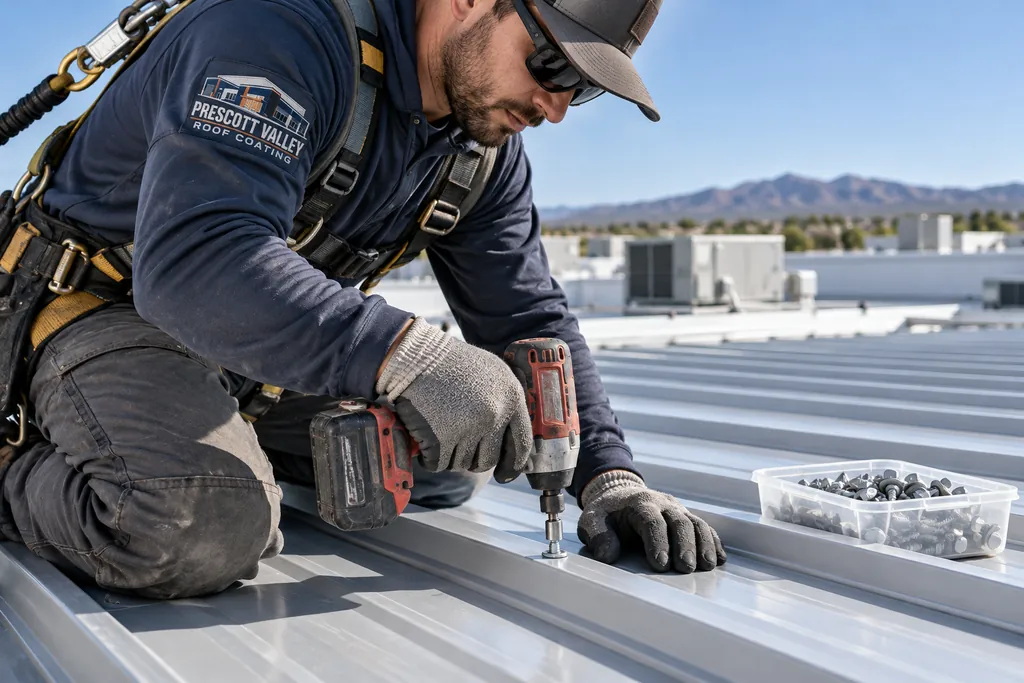
  2. Roofer replacing a fastener on a commercial metal roof

    Repair And Replace Wet Areas

    Fasteners, laps, and flashing get repaired first, and any wet insulation found in the cores is cut out and replaced with dry board.

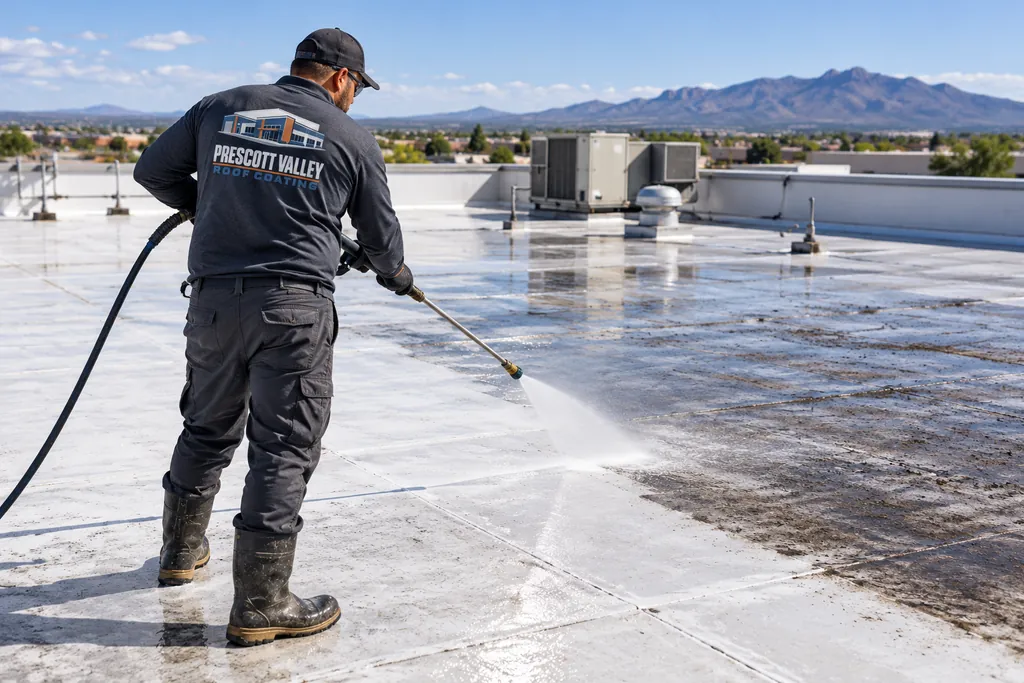
  3. Worker washing a commercial roof membrane before coating preparation

    Prepare The Surface

    Washing, rust treatment, and primer change by system. Metal gets rust primer, silicone over asphalt gets a bleed-block primer, and foam needs a dry, clean deck.

  4. Roofer applying reinforcing fabric and coating around an HVAC curb

    Coat In Sections

    Detail work at curbs and drains goes first, then the field. Sections stay small enough to finish before afternoon storms or evening cold set in.

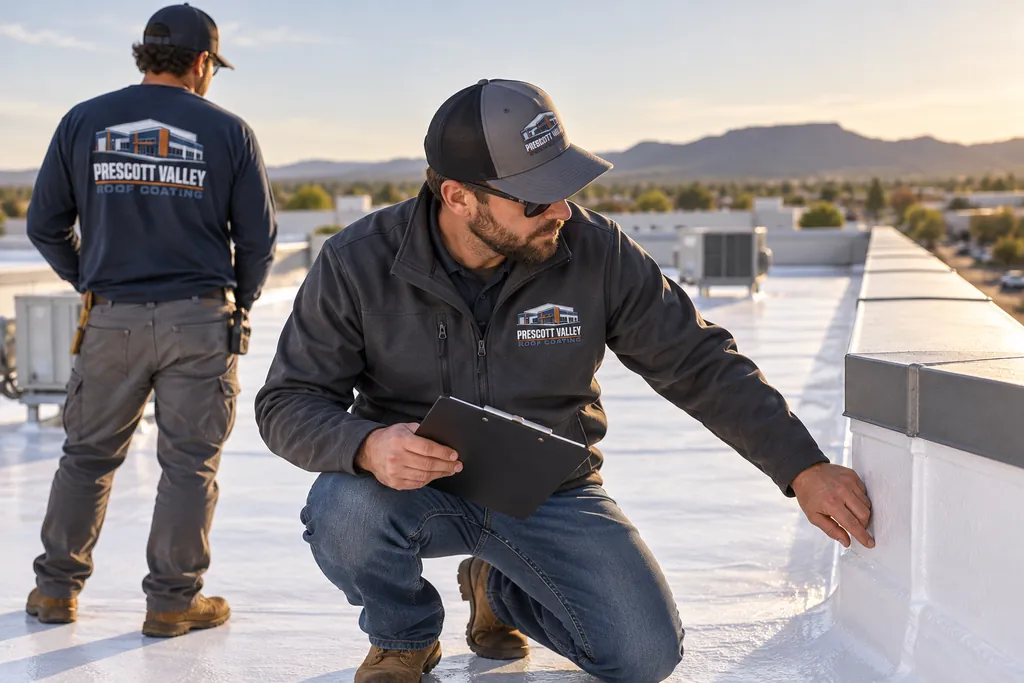
  5. Inspector reviewing flashing details on a white-coated commercial roof

    Walk It With You

    A closing walk compares the finished roof with the inspection photos. You get a short list of maintenance checks for spring and fall.

Service Questions

Prescott Valley Commercial Roofing Services Questions

Most asked

Which coating is best for a four-season climate?

It depends on drainage and how the roof is used. Silicone suits roofs where snowmelt or rain sits near drains for days. Acrylic fits well-drained roofs when budget leads, applied in warm, dry weather. Polyurethane handles foot traffic and hail, and metal roofs take acrylic or silicone over sealed fasteners and seams.

Do you repair roofs or only coat them?

We repair what the coating needs in order to work: open seams, loose flashing, backed-out fasteners, clogged drains, and wet insulation. Those repairs are part of the coating job. Full replacement is a separate decision we talk through when the inspection points that way.

Can two systems be used on one roof?

Yes. A roof with a low section near the drains often gets silicone there and acrylic on the well-drained field, provided the products are compatible side by side. A metal canopy or shop wing on the same building can get its own system too.

How long does a coating job take?

Most commercial roofs need a few days to a few weeks of roof time. Size, repair work, and cure weather set the pace. Crews work in sections, so parts of the roof are finished while others are still being prepped.

Can you coat a roof that leaks today?

Yes, after the leak is traced and repaired. Small active leaks are often fixed on the first visit, and the coating follows once the roof is dry. Water sealed under a coating would only move the leak somewhere else.

Do I need to move equipment off the roof?

Rarely. HVAC units stay in place, and we coat around their curbs and reinforce the corners. Loose items such as old satellite dishes, stored materials, or abandoned conduit are moved or removed with your approval before washing starts.

Will a white coating make the roof slippery?

A smooth coating gets slick when it is wet or frosted, which matters on winter mornings in Prescott Valley. Walk pads to rooftop units and grit broadcast along service paths give technicians better footing.

What paperwork do I get at the end?

You get the inspection photos, a list of the repairs made, the coating system and thickness applied, and a maintenance checklist. Keep it with your building records, since it helps the next inspector and any future recoat.

Get A Free Estimate For Your Commercial Roof

Tell us the roof type if you know it, or what you see on the surface. We match the system after the inspection.

Free EstimateCall Us