Roof Coating FAQ For Prescott Valley
Prescott Valley sits at about 5,100 feet in central Yavapai County, where commercial roofs go through all four seasons: snow and freezing nights in winter, intense high-altitude sun, and monsoon storms in summer.
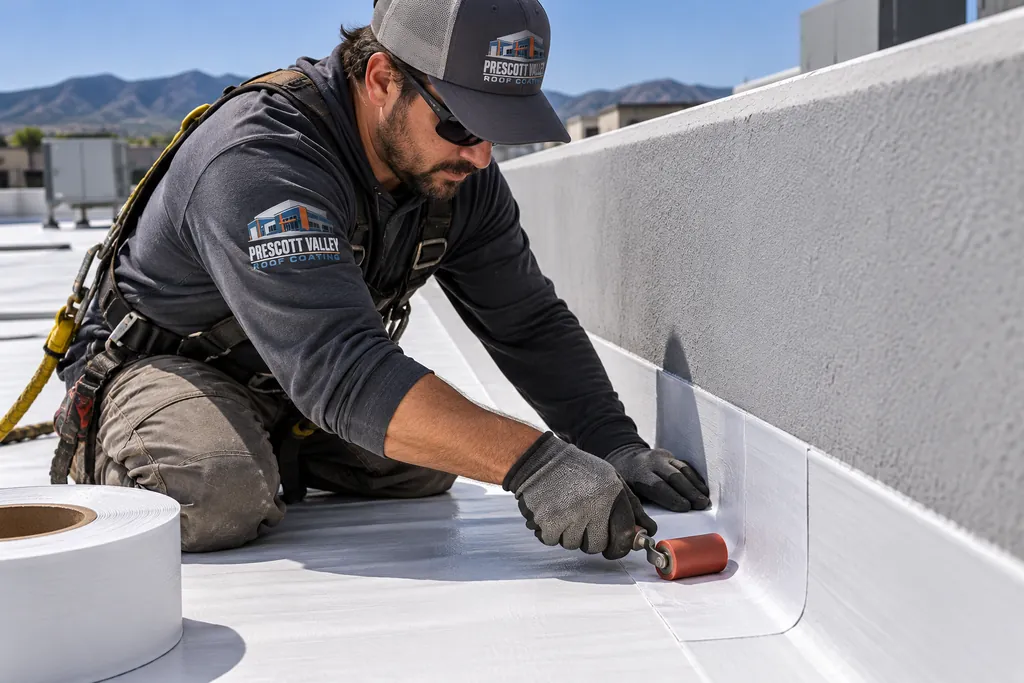
Low-Slope Roofs On Every Kind Of Building
Retail centers along Highway 69 and Glassford Hill Road, medical and professional offices, light industrial buildings, schools, and churches commonly have low-slope roofs that can be restored with a coating.
(928) 436-4811Cost And Incentives
Are commercial roof coatings tax deductible?
They can be. For nonresidential buildings already in service, roof improvements may be expensed under Section 179 instead of depreciated over 39 years, up to a 2026 limit of $2,560,000 (IRS Publication 946).
Some coating work may qualify as an ordinary repair expense instead. Residential rental property is excluded from Section 179, so check with your accountant about your situation.
Does APS offer incentives for cool roofs in Prescott Valley?
Prescott Valley is in APS territory. APS business incentive programs change over time, so check what's currently offered for your building before starting a project. Programs that include cool roofs typically require a product listed in the CRRC Rated Roof Products Directory and a contractor licensed by the Arizona Registrar of Contractors.
Coating Choice
Is a white reflective coating worth it in Prescott Valley's cooler climate?
Usually, but for somewhat different reasons than on the desert floor. Summers here are milder than in Phoenix, so cooling savings from a reflective roof are typically smaller. The main benefits are waterproofing, protection from high-altitude UV, and extending the life of the existing roof.
A light roof can slightly reduce helpful solar heat in winter, but on most commercial buildings with insulated roofs that effect is small compared with the summer and durability benefits. If winter heating is a major concern, ask about light gray or tan coatings that balance reflectivity and appearance.
Which coating is best for a four-season climate?
It depends on drainage and how the roof is used:
| Condition on your roof | Coating usually recommended |
|---|---|
| Snowmelt or rain sits near drains for days | Silicone, which is rated for ponding water |
| Good drainage, budget is the priority | Acrylic, applied in warm, dry weather |
| Frequent foot traffic or hail exposure | Polyurethane base or top coat for impact and abrasion resistance |
| Metal roof | Acrylic or silicone over sealed fasteners and seams |
Many roofs combine systems, such as silicone across the field of the roof with reinforced detail work at drains, curbs, and parapets.
How long does a coating last in Prescott Valley?
Most commercial coatings last 10 to 20 years here, depending on the product, the applied thickness, and how well the roof is maintained through winter. Coatings that go on at the full specified thickness and get regular spring inspections last the longest.
When the surface wears thin, the roof can be cleaned, repaired, and recoated rather than replaced.
Roof Condition
How does freeze-thaw damage commercial roofs?
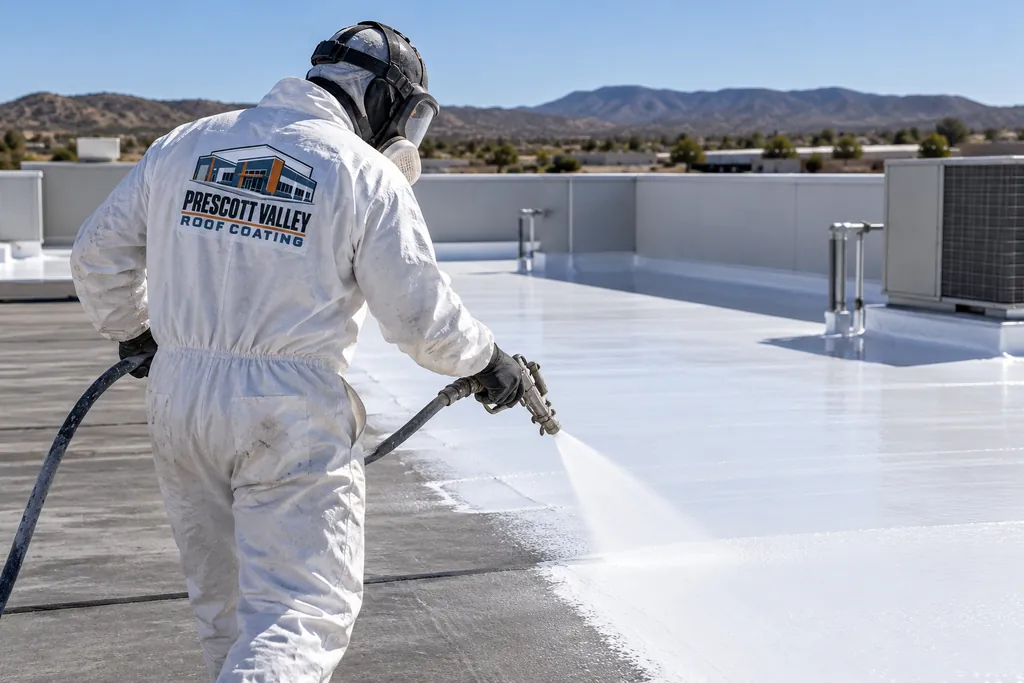
Water gets into small cracks, open seams, and gaps around flashing, then freezes overnight and expands. Each cycle pries those openings a little wider, and in spring the roof leaks in places that were dry in fall.
A coating with no seams closes those small openings so water can't get in to freeze, and a flexible coating moves with the roof through cold nights and warm afternoons instead of cracking.
Can a coated roof handle snow and ice?
Yes. A properly cured coating isn't harmed by snow sitting on it. The bigger issues on low-slope roofs are:
- Snowmelt ponding. Melting snow can refreeze at drains and scuppers, backing up water across the roof. Coatings rated for ponding water, such as silicone, handle these conditions best.
- Ice at parapets and edges. Ice buildup stresses flashing and edge details, which are sealed and reinforced before coating.
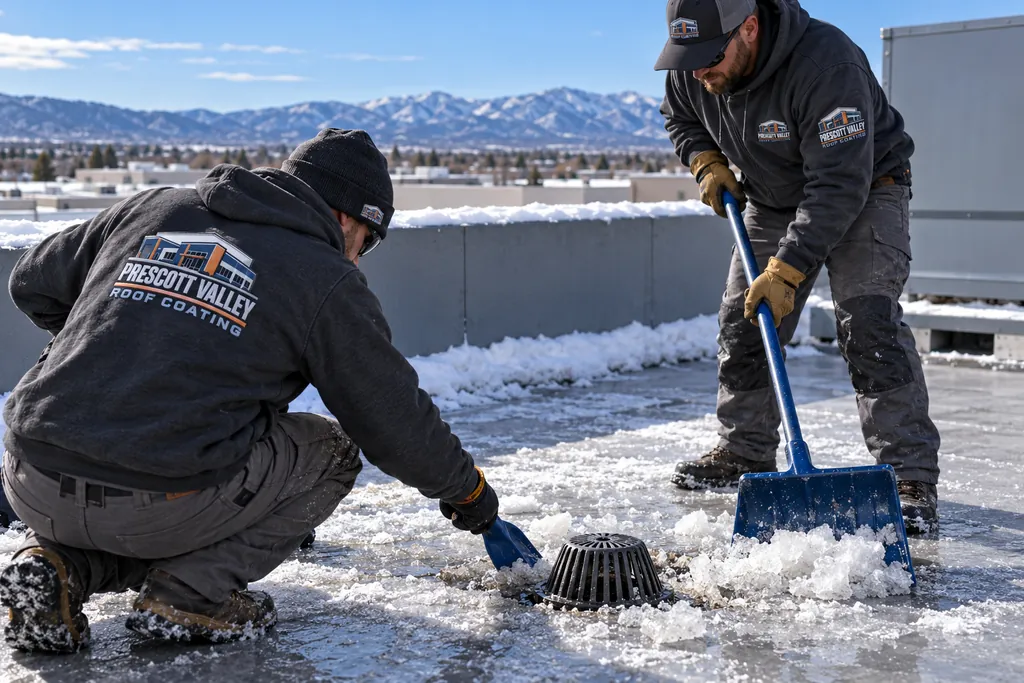
- Snow removal. Metal shovels and ice picks can gouge a coating. If snow has to be removed, use plastic tools and leave a thin layer on the roof surface.
A coating doesn't change a roof's structural snow capacity. If you're concerned about heavy snow loads, have a structural engineer evaluate the building.
Does hail damage roof coatings?
Large hail can bruise or puncture a coating, especially over soft substrates like foam. Monsoon storms in central Arizona occasionally produce hail, so tougher coatings and thicker applications make sense on exposed roofs.
After a hailstorm, have the roof inspected and documented promptly. Small punctures are easy to patch, and photos taken soon after the storm help if you file an insurance claim.
Process And Maintenance
When is the best time to coat a roof in Prescott Valley?
Late spring and early fall offer the most reliable conditions. Coatings need dry weather and temperatures that stay above the product's minimum long enough to cure, and nights at this elevation can dip near freezing well into spring and again in fall.
Summer works too, but monsoon storms often build in the afternoons, so crews start early and plan around the forecast. Winter application is generally avoided except during unusually warm, dry stretches.
What maintenance does a coated roof need in Prescott Valley?
Inspect the roof each spring, after winter's freeze-thaw cycles, and again in fall before snow arrives. Between inspections:
- Keep drains and scuppers clear so snowmelt and monsoon rain can drain
- Check flashing and parapets for ice damage after winter
- Have the roof checked after any hailstorm
- Use plastic tools if snow has to be removed
- Patch punctures and worn spots before winter so water can't get in and freeze
How do I get started?
Call us or request a free estimate to set up a free commercial roof inspection. We'll assess the roof's condition, check for moisture and freeze-thaw damage, and tell you whether coating, repair, or replacement is the right fit.
Local And Permits
Do I need a permit to coat a commercial roof in Prescott Valley?
It depends on the scope. Buildings inside town limits fall under the Town of Prescott Valley building safety division, and the town code requires permits for work regulated by its building codes.
Full re-roofs typically need a permit, while coating and maintenance work varies, so requirements are confirmed with the town before work begins. Properties outside town limits in unincorporated Yavapai County fall under the county instead.
How do monsoon storms affect roofs in Prescott Valley?
The National Weather Service defines Arizona's monsoon season as June 15 through September 30, and the Prescott area often sees afternoon thunderstorms, heavy rain, gusty winds, and hail during that time. Heavy downpours test drains and scuppers, and wind-driven rain finds weak seams. Local forecasts and storm warnings come from the National Weather Service in Flagstaff.
What areas do you serve?
We provide commercial roof coatings in Prescott Valley, Arizona, and in the nearby communities of Prescott, Chino Valley, Dewey-Humboldt, Paulden, Mayer, Spring Valley, and Cordes Lakes.
Ask Us About Your Own Roof
Call with the roof type and what you are seeing, or request an estimate and we will set up an inspection.