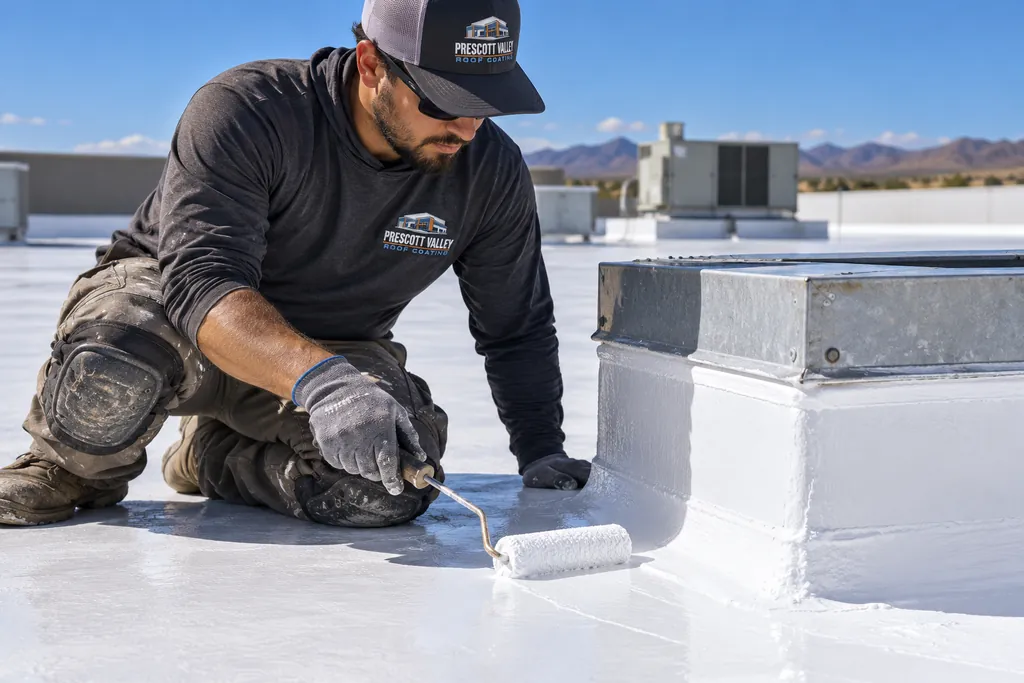
Acrylic Roof Coating
On a roof that drains within a day of a storm, acrylic costs less and recoats easily. It needs warmer, drier days to cure.
Acrylic roof coating details
We apply silicone coatings to flat commercial roofs in Prescott Valley that hold snowmelt near drains. A moisture survey comes first, so wet areas are replaced before coating.
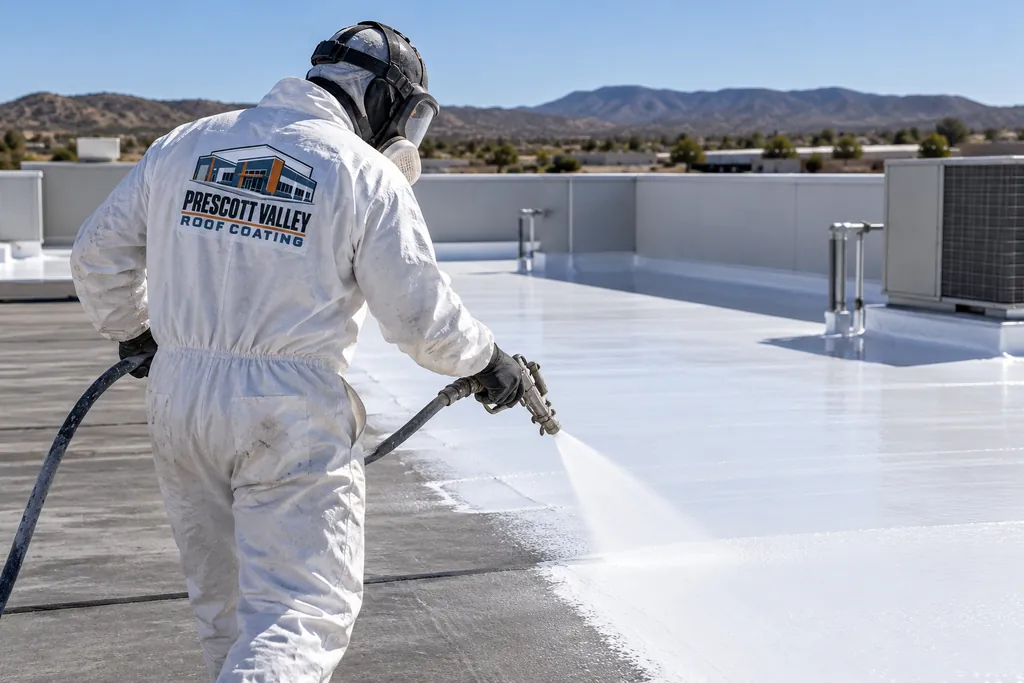
Silicone goes over more roof types than any other coating we use. The deck and insulation under it still have to be dry.
Each item on the plan gets checked and repaired before any silicone touches the roof.
Snowmelt that refreezes around a drain lifts the clamping ring and opens the flashing. We clear the bowl, reset the ring, and seal the flashing so water leaves the roof again.
Low spots that hold water for days are measured with a level. Silicone tolerates the water, but tapered insulation or a new drain goes in where the low spot keeps growing.
Water dams up on the uphill side of large HVAC curbs. A small cricket of tapered insulation diverts it, and the curb flashing is reinforced before coating.
Raised blisters mean air or moisture trapped between plies. They get cut open, dried, and patched flat, since silicone over a blister would seal the problem in.
Single-ply and modified bitumen laps open at the edges after years of freeze-thaw. Each open lap is cleaned and sealed, and reinforcing fabric goes over seams that move.
Silicone goes over most low-slope surfaces, with prep that changes by membrane.
| Existing roof | Prep before silicone | Primer | Notes |
|---|---|---|---|
| Built-up with gravel | Loose gravel removed and the surface power washed | Bleed-blocking primer where asphalt stains | Heaviest prep of the group |
| Modified bitumen | Open laps sealed and loose granules washed off | Bleed-blocking primer if the test patch stains | Granulated cap sheets clean up well |
| TPO or PVC single-ply | Seams probed and resealed, chalking cleaned | Single-ply primer | Adhesion test on every roof |
| Spray foam | Damaged foam cut out and patched | Rarely needed on clean foam | Good match for ponding areas on foam |
| Worn acrylic coating | Loose coating removed, then washed | Primer per the adhesion test | Silicone bonds over acrylic, while acrylic will not bond over silicone |
Silicone earns its place on flat roofs that hold water. These are the gains owners see.
Silicone is rated for ponding water, so the low areas around drains that ruin other coatings stay sealed. That matters on roofs where snowmelt and monsoon rain linger before draining.
Strong ultraviolet light at about 5,000 feet chalks many roof surfaces, while silicone holds up to it. That keeps the white surface intact longer between maintenance checks.
One heavy pass of silicone often covers a primed roof, so the existing membrane stays in place and the building avoids tear-off and disposal costs.
When the surface thins after years of service, it is cleaned and recoated with silicone. The roof keeps the same membrane underneath through each cycle.
Call and tell us how long the water stays after a storm and whether it freezes overnight. That points us to the drain or low spot to check first.
(928) 436-4811Silicone bonds to almost any clean, dry roof, so most of the work happens before it goes on.
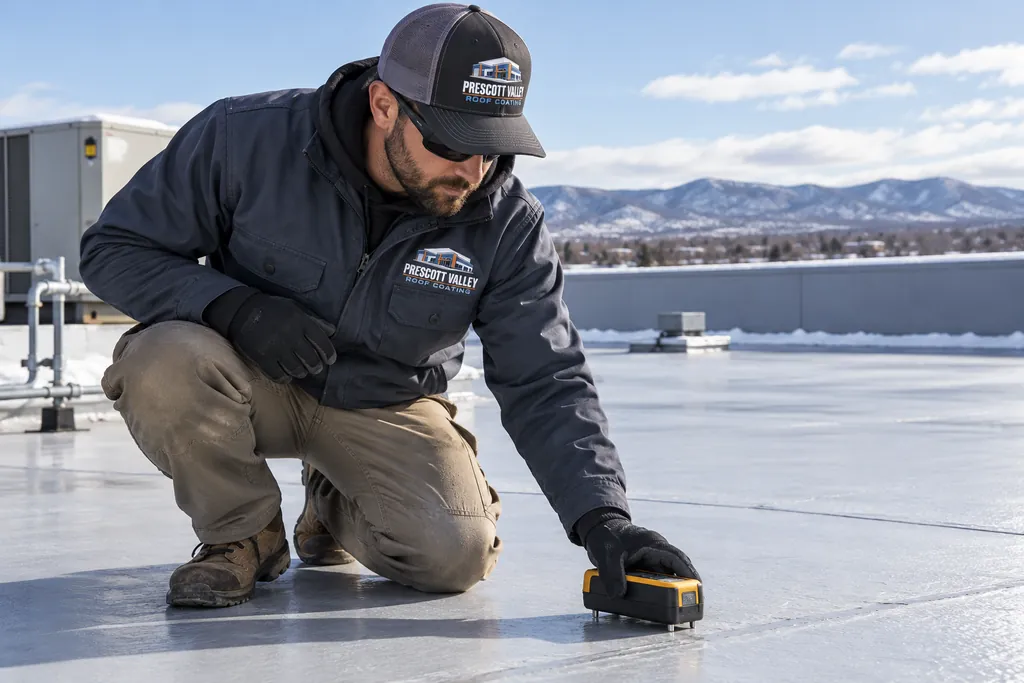
A moisture meter sweeps the field, and core cuts confirm what it finds. Low spots get measured with a level, and every drain and seam is photographed.
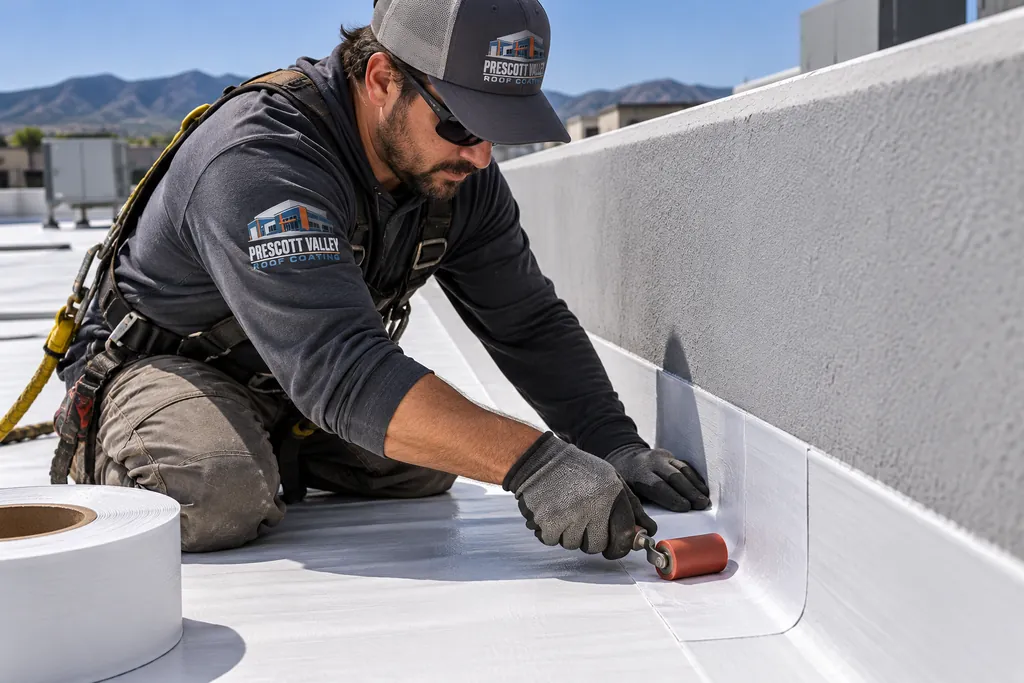
Wet insulation is cut out and replaced with dry board. Open laps, parapet flashing, and drain clamps are repaired so the roof is watertight before coating.
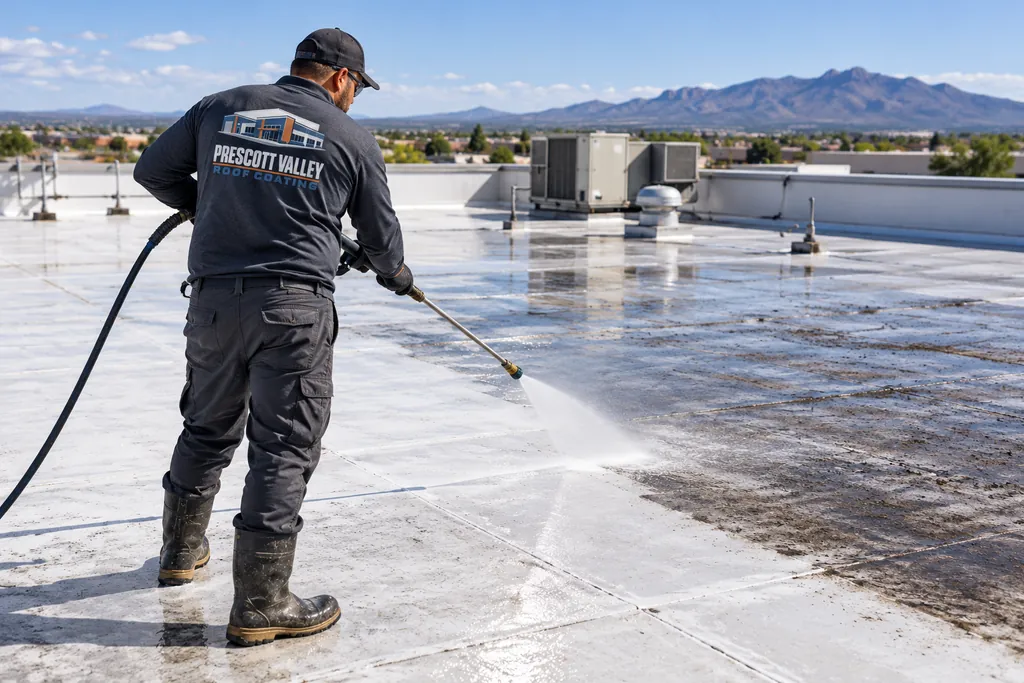
Power washing strips dirt and loose granules. We run a pull test on small coated patches to confirm adhesion and decide whether a primer is needed.
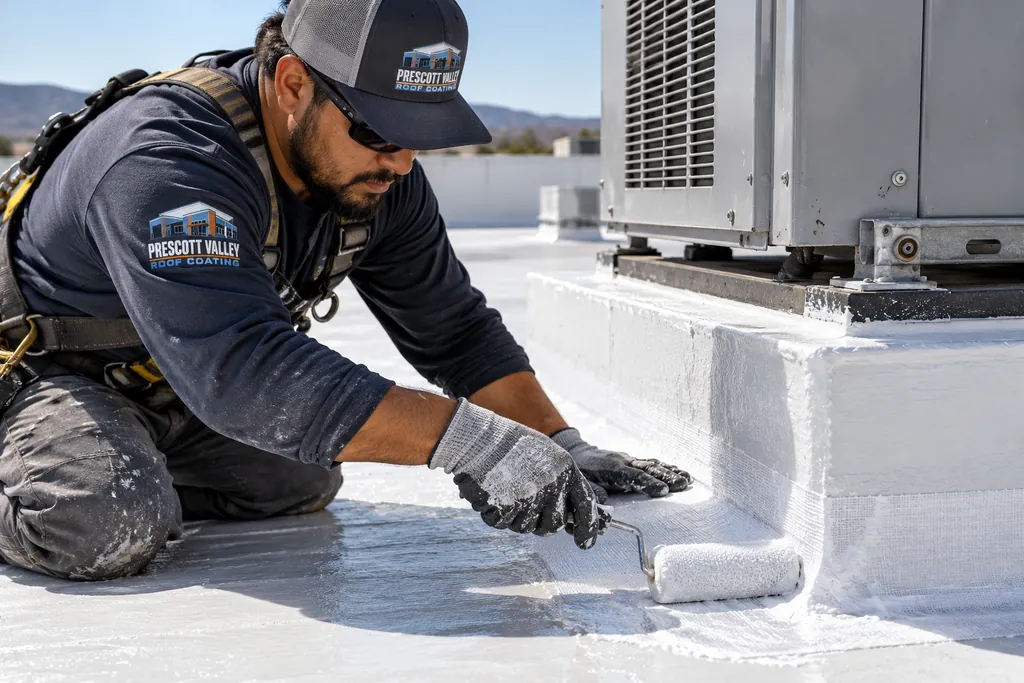
Fabric and detail coats go on at drains, curbs, and laps first. The field is then sprayed in one heavy pass, checked with a wet-film gauge as it goes.

We check thickness readings, look over every detail, and walk you through the drains to keep clear. Silicone skins over fast enough to shed a storm within hours.
Silicone is the default for slow-draining flat roofs. These two systems come up when the roof is different.
On a roof that drains within a day of a storm, acrylic costs less and recoats easily. It needs warmer, drier days to cure.
Acrylic roof coating details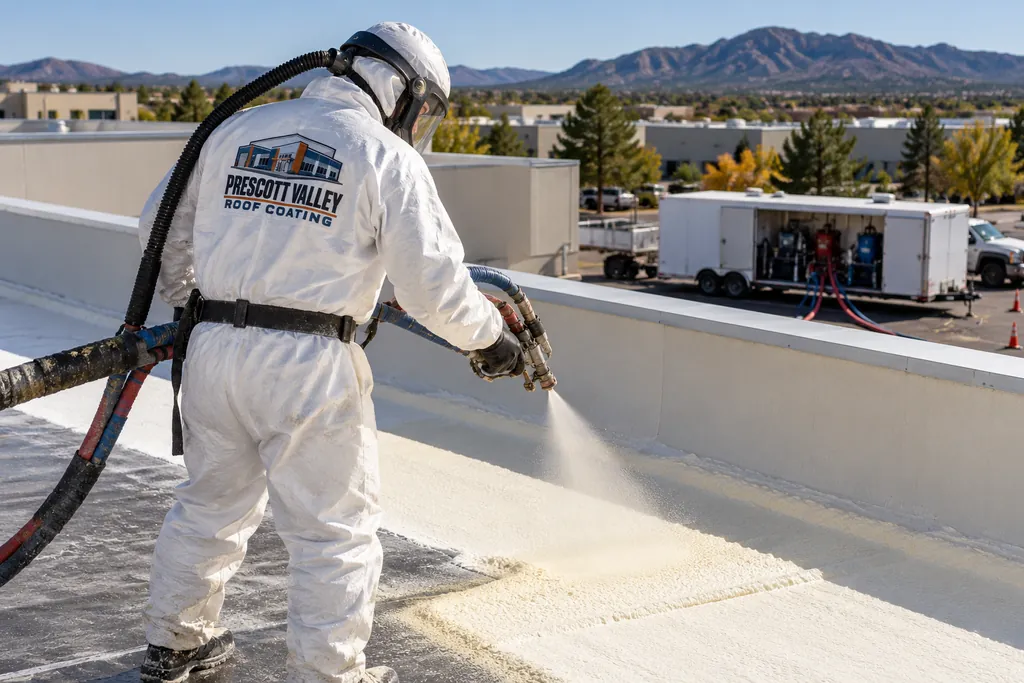
Where low spots are too deep for coating alone, sprayed foam can be built up to fill them before a silicone topcoat.
Spray foam roofing detailsMost asked
Yes. A cured coating is not harmed by snow sitting on it. The bigger issues are snowmelt that refreezes at drains, which silicone handles best because it is rated for ponding water, and ice stress at parapets, which we seal first. If snow must be removed, use plastic tools and leave a thin layer.
No. Very little sticks to cured silicone except more silicone. Plan on silicone for future recoats, which is simple: clean the roof, repair any damage, and apply a new silicone coat.
The surface stays slightly soft, so dust and pollen stick to it and the white dulls over time. Rain and an occasional rinse bring much of it back. The dirt changes appearance more than performance.
Yes, when wet or frosted. We add walk pads or a grit-broadcast path to rooftop units so service technicians have safe footing year-round, especially on winter mornings when frost lingers in the shade of parapets.
Oils in asphalt roofs can rise into a fresh coating and stain it brown. On built-up and modified bitumen roofs we test a small area first, and a bleed-blocking primer goes down wherever the test shows staining.
Sometimes. Clean single-ply and asphalt roofs often take silicone directly, while chalky or stained surfaces need primer. Pull tests on small patches settle it for each roof before the full coat goes on.
Most silicones skin over quickly and handle light rain within an hour or two of application, well before full cure. We still watch the forecast closely during monsoon afternoons and start work early in the day.
Tell us where water sits after a storm and how big the roof is. We will start with a moisture survey.
Leave a name and number and a roofing contact will call you back.
Or call now: (928) 436-4811