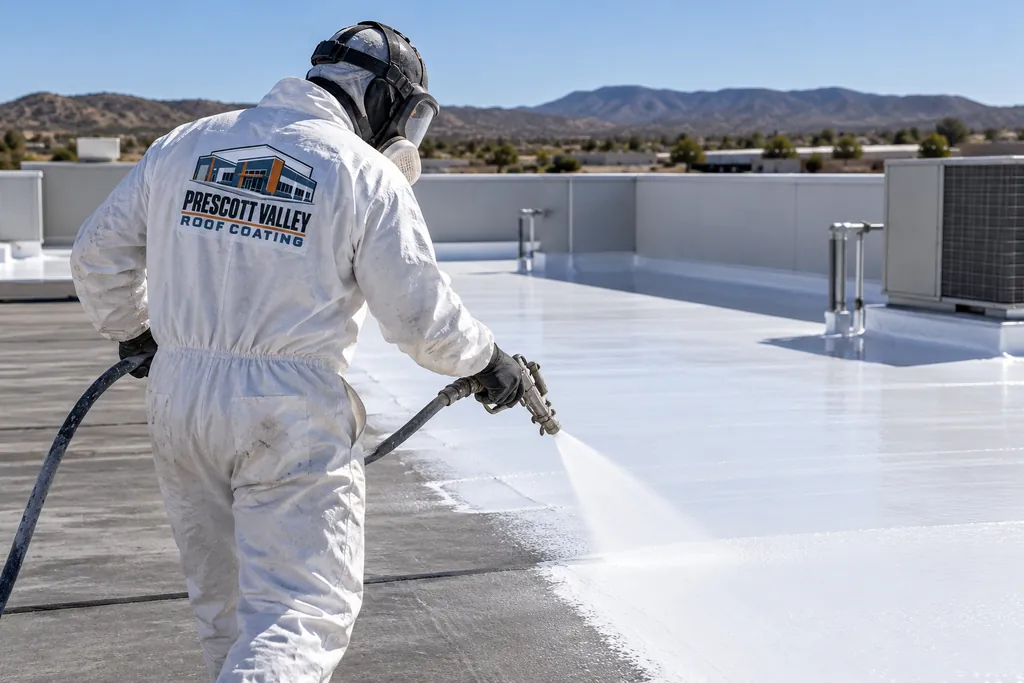
Silicone Roof Coating
Low-pitch metal roofs where water sits at the laps after snowmelt often get silicone instead of acrylic, because it holds up under that standing water.
Silicone roof coating details
We coat exposed-fastener and standing-seam metal roofs on commercial buildings in Prescott Valley. Fasteners, laps, and rust get fixed first, so the coating seals a tight roof.
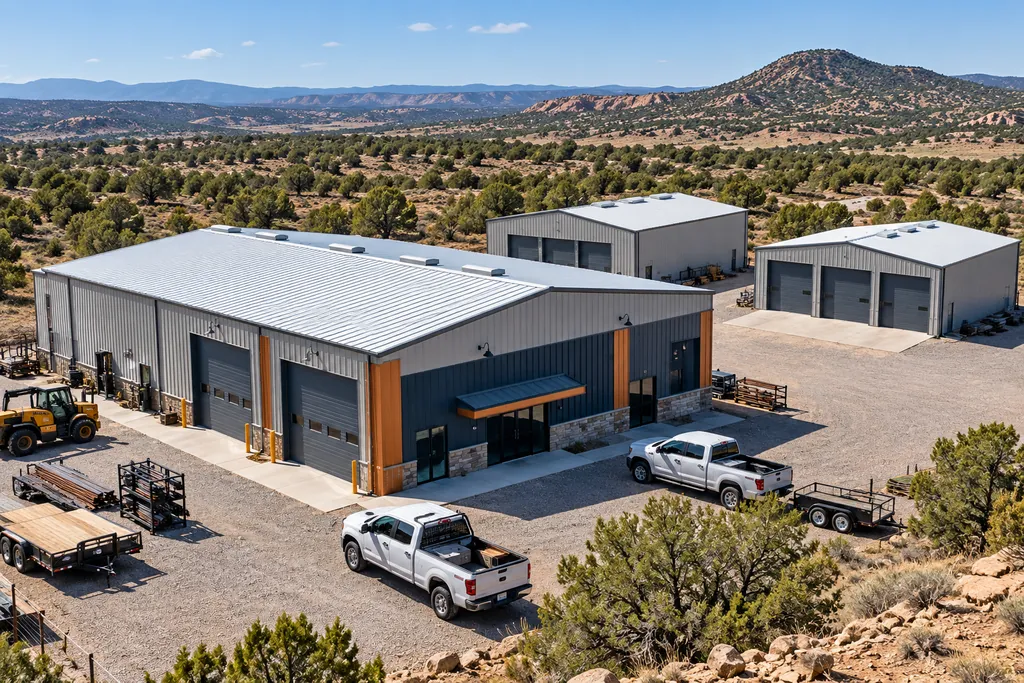
Metal roofs take coating well when the panels are still attached and the rust sits on the surface. Rusted-through panels get replaced first.
Metal moves every day as it heats and cools, and freezing nights add ice to the mix. These five spots are where we find most of the leaks.
Daily expansion works screws loose, and worn rubber washers let water follow the shank inside. We replace loose and stripped screws with oversized fasteners and new washers before coating.
Where one panel overlaps the next, meltwater can wick uphill and sit between the sheets. Laps get cleaned, primed, and sealed with butyl tape or mastic before the field coat.
Foam closures under the ridge cap shrink and crack, letting wind-driven snow inside. Loose ridge fasteners and failed closures are replaced, then the cap joints get reinforced coating.
Fiberglass skylight panels and HVAC curbs sit on flashing that loosens as the roof flexes. Each edge is resealed, and fabric is set into the coating at the corners.
Rust starts at panel ends, cut edges, and scratched spots. Loose rust is wire-brushed off and the bare metal gets rust-inhibiting primer, so the coating bonds to a stable surface.
Slope and panel condition decide which of these fits a metal building.
| Option | Best when | What it needs first | Later on |
|---|---|---|---|
| Acrylic over primed metal | The roof has good pitch and drains fast | Fastener and lap work, then rust primer | Recoats with acrylic after cleaning |
| Silicone over primed metal | Low-pitch metal where water lingers at laps | The same prep plus a silicone-compatible primer | Recoats with silicone only |
| Spray foam with a topcoat | The building also needs insulation, or panels are uneven | Dry, clean panels and fastener repairs | Topcoat renewed as it wears |
| Seam and fastener program | Panels and paint are still in good shape | Fastener replacement and lap sealing only | Full coating later, when the paint wears |
A coated metal roof keeps the structure and panels you already paid for. Here is what owners get from it.
Most metal roof leaks start at screws and laps, and a coating covers every one of them in a continuous layer. Paired with fastener replacement, it closes the paths winter water follows into the building.
Primer and coating keep moisture off bare steel at laps and cut edges, where rust spreads fastest. Panels last longer when that water stops reaching the metal.
A white topcoat reflects much of the summer sun that would heat dark or faded panels. Shops and storage buildings without insulation notice the change most.
Coating goes on with the panels in place, so the building avoids removal, new panels, and the scrap that comes with them. Inventory and equipment inside stay covered.
Call and tell us whether the drip shows up in afternoon sun or overnight. Timing helps us tell a lap leak from condensation under the panels.
(928) 436-4811Each step builds on the one before. The coating only goes on after every fastener and lap is tight.
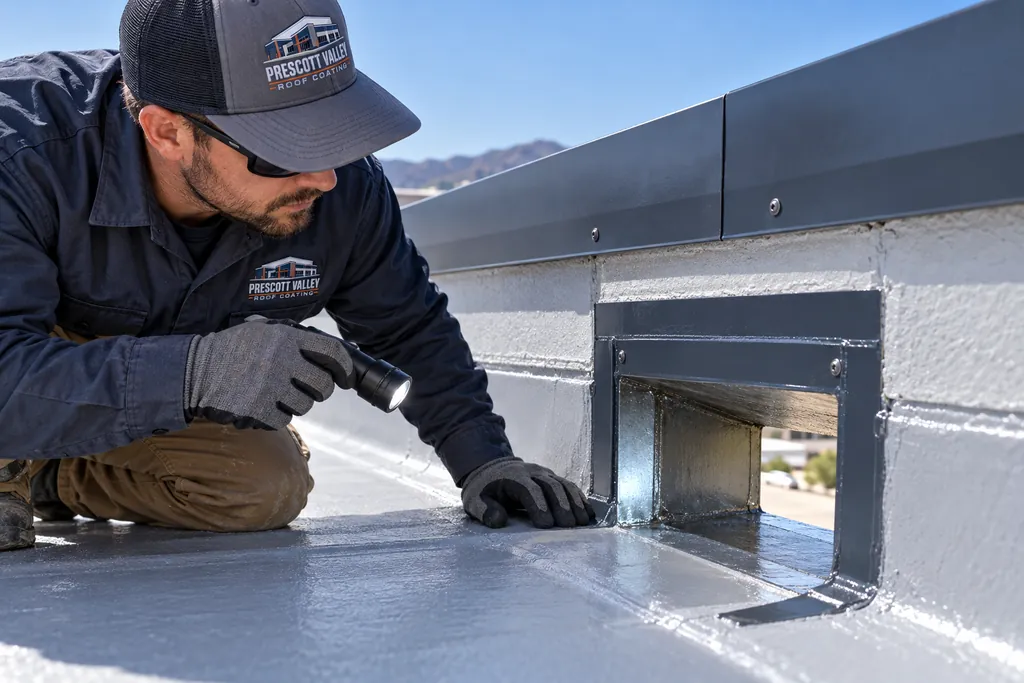
We walk the panels, check every row of screws, and look at laps, ridge cap, gutters, and skylights. Underside checks tell us whether a drip is a leak or condensation.
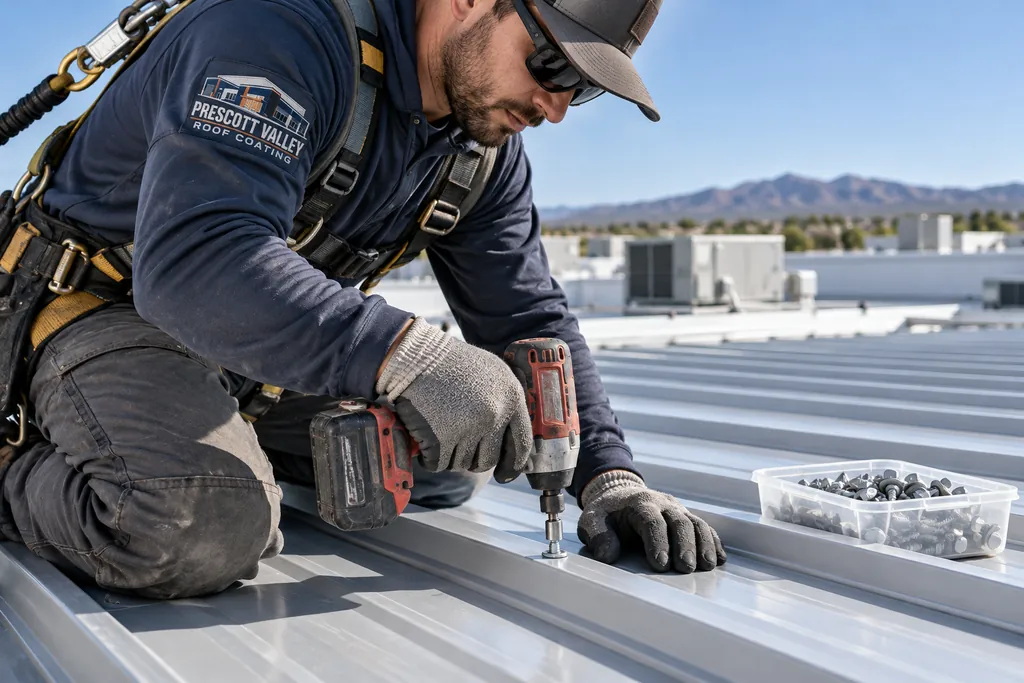
Loose, stripped, and rusted screws come out, and oversized fasteners with new washers go in. Every row gets checked, since one bad screw can leak across a whole bay.
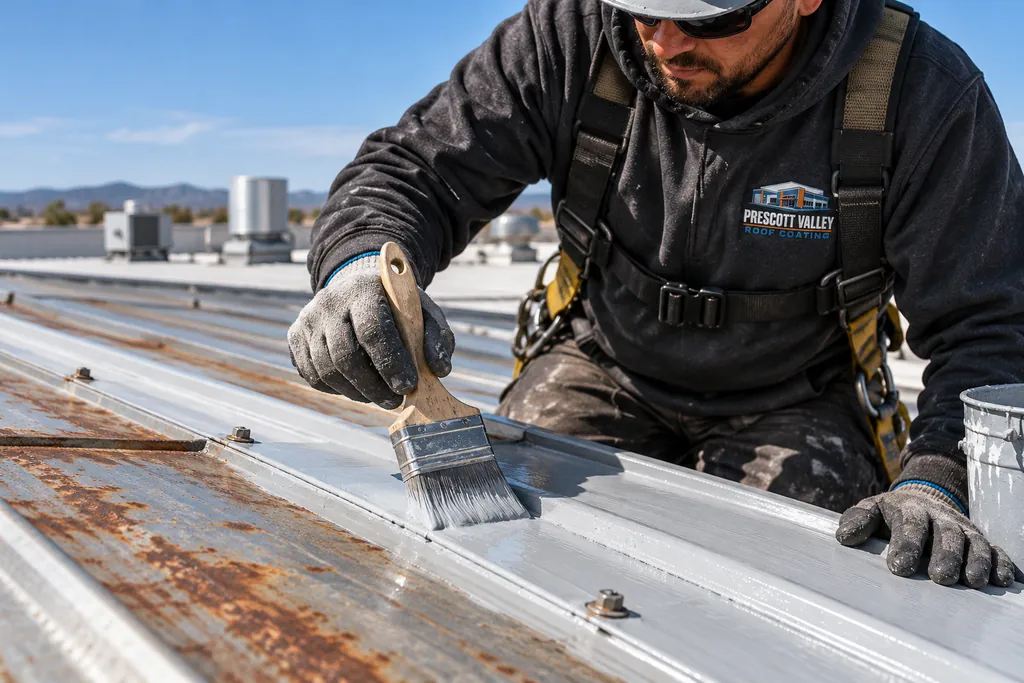
End laps and side laps are cleaned and sealed with tape or mastic. Bare and rusted spots get rust-inhibiting primer, and the whole roof is washed of chalk and oil.
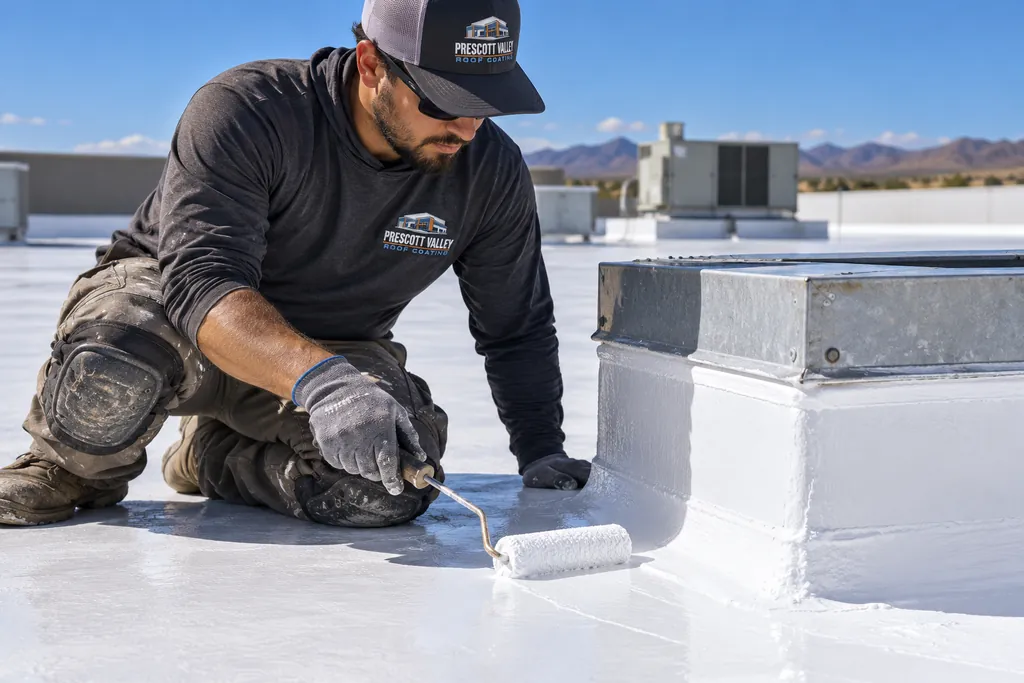
Detail coats go over fastener heads, laps, and curbs first. The field coat follows at the specified thickness, sprayed or rolled across the ribs and flats.
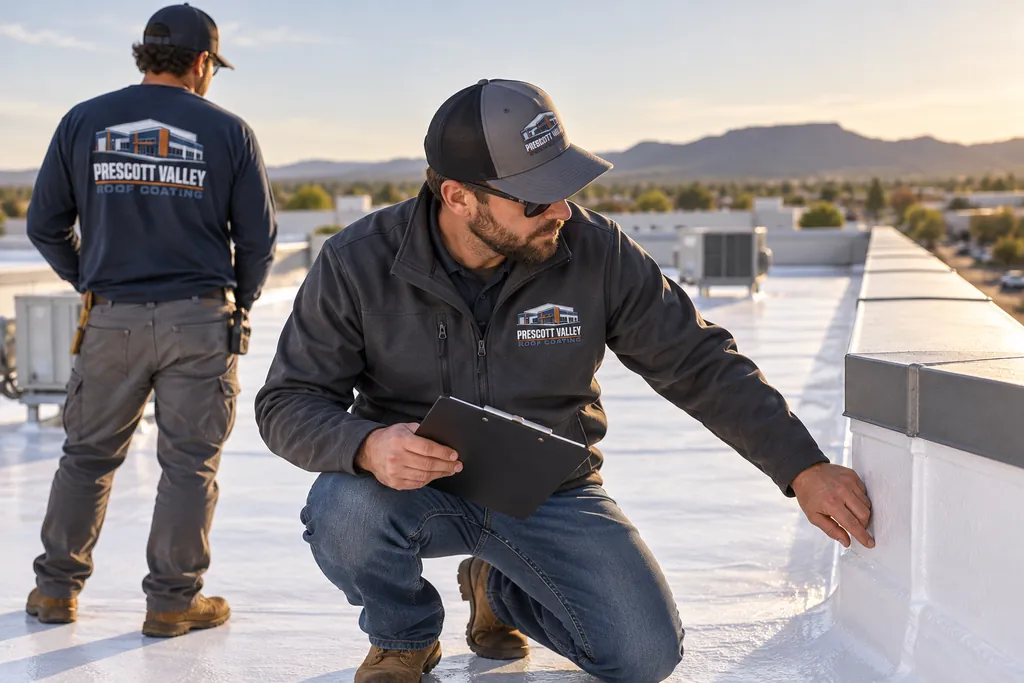
A last walk confirms coverage on every fastener and rib. You get photos of the finished details and a short list of spring checks for gutters and seams.
Two other systems come up on metal buildings around Prescott Valley.
Low-pitch metal roofs where water sits at the laps after snowmelt often get silicone instead of acrylic, because it holds up under that standing water.
Silicone roof coating details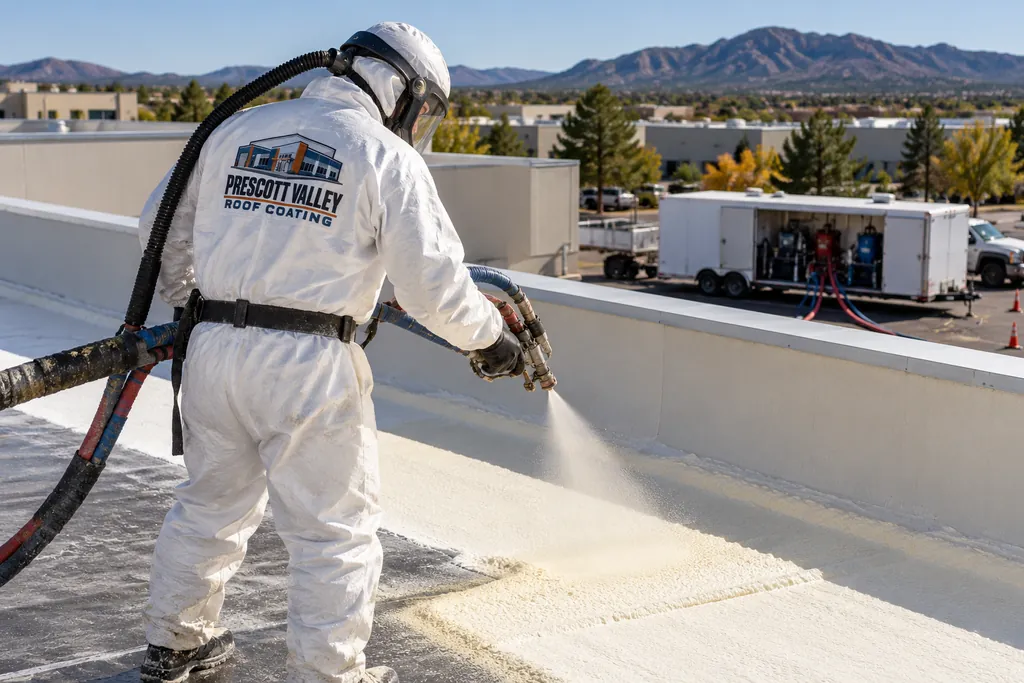
When a shop also needs insulation, sprayed foam over the panels adds it and evens out the ribs before a protective topcoat goes on.
Spray foam roofing detailsMost asked
Usually, though for different reasons than in Phoenix. Summers here are milder, so cooling savings are smaller. On a metal building the bigger gains are waterproofing at fasteners and laps, protection from high-altitude UV, and longer panel life. If winter solar heat matters to you, a light gray or tan coating balances reflectivity and appearance.
Surface rust, yes, after loose scale is wire-brushed off and the metal is primed with a rust-inhibiting primer. Panels with holes rusted through need patch plates or replacement first, because coating alone will not bridge an open hole for long.
Every loose, stripped, or rusted screw gets replaced, plus any with cracked washers. On older roofs that often turns into most of them. Screws that are tight with sound washers stay, and all of them get covered by the coating.
Often the cause is condensation rather than a leak. Warm, moist air inside meets cold panels overnight and drips at dawn. We check the underside during the inspection, since coating fixes leaks while insulation or ventilation fixes condensation.
The panels keep moving with temperature, and the coating is made to stretch with them. That flexibility is why it holds at laps and fasteners where rigid sealants crack after a few winters.
A typical shop or warehouse roof takes several days to two weeks, mostly spent on fasteners and laps. The coating itself goes quickly once prep is done, as long as nights stay above the product's cure minimum.
Yes, though standing-seam roofs leak less at fasteners and more at seams, end laps, and penetrations. We seal those details and coat the panels, keeping seam clips and expansion points free to move.
Send the building size and what you see at the laps and screws. We will set up an inspection of the panels.
Leave a name and number and a roofing contact will call you back.
Or call now: (928) 436-4811