Silicone Roof Coating
If insulation is already adequate and the roof only needs waterproofing, silicone over the existing membrane costs less than foam.
Silicone roof coating details
We install and recoat spray foam roofing on commercial buildings in Prescott Valley. Foam adds insulation over a dry roof, and its topcoat takes the sun and hail.
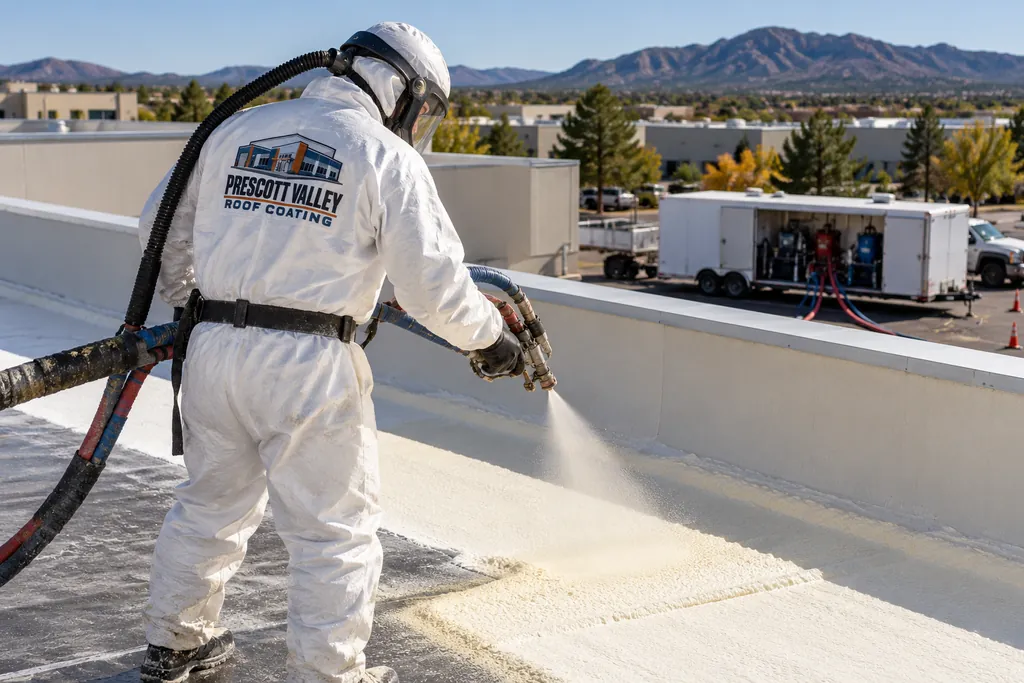
Foam needs a dry, clean surface to bond to. When that is in place, it fits more roofs than most owners expect.
Some of these apply to a new foam job, and others to an existing foam roof due for a recoat.
Hail dents the topcoat and can crush the foam under it. Small bruises are sealed during the recoat, while deeper ones are cut out and refilled with foam.
Foam has to taper cleanly to edge metal so water runs off instead of tracking back under. Damaged edge metal is replaced before spraying.
Curbs and penetrations seal well in foam, but rooftop air intakes have to be covered while we spray. We coordinate shutoffs with your maintenance staff.
Extra passes of foam can raise low areas so water drains. Foam is one of the few systems that changes the roof shape as it goes on.
Sunlight browns foam left without enough topcoat and turns it powdery. Those patches get sanded back to firm foam and recoated before the UV damage spreads.
Spray foam jobs come in four forms, and each ends with a protective topcoat.
| Option | Best when | Topcoat | Later on |
|---|---|---|---|
| New foam over the existing roof | The old roof is dry and attached but worn | Silicone or acrylic | Recoat the topcoat as it wears |
| Foam after tear-off | The old roof is wet or has too many layers | Silicone or acrylic | The same recoat cycle |
| Foam recoat | Existing foam is solid with a worn topcoat | Matches or upgrades the old topcoat | Repeat on the same cycle |
| Foam with a polyurethane topcoat | Heavy foot traffic or frequent hail | Polyurethane, sometimes with granules | A tougher surface between recoats |
Foam adds insulation as well as a new roof surface. These are the benefits owners weigh.
Sprayed foam adds insulation across the whole roof and seals around every curb and pipe in the same pass. Buildings with little or no roof insulation see the biggest change.
Thicker passes of foam go where water collects, so shallow ponding areas drain after the job. Deep structural sags still need framing work first.
Foam goes over a dry existing roof, so the old membrane stays in place as a base. That skips disposal and keeps the building covered during the work.
The foam lasts as long as its topcoat protects it. Recoating every several years keeps UV and hail off the foam and adds service life to the roof.
Call after the storm and tell us how large the hail was. Photos taken now, before the next rain, help document the damage.
(928) 436-4811Foam bonds only to a dry, clean roof, so the first half of the job is preparation.
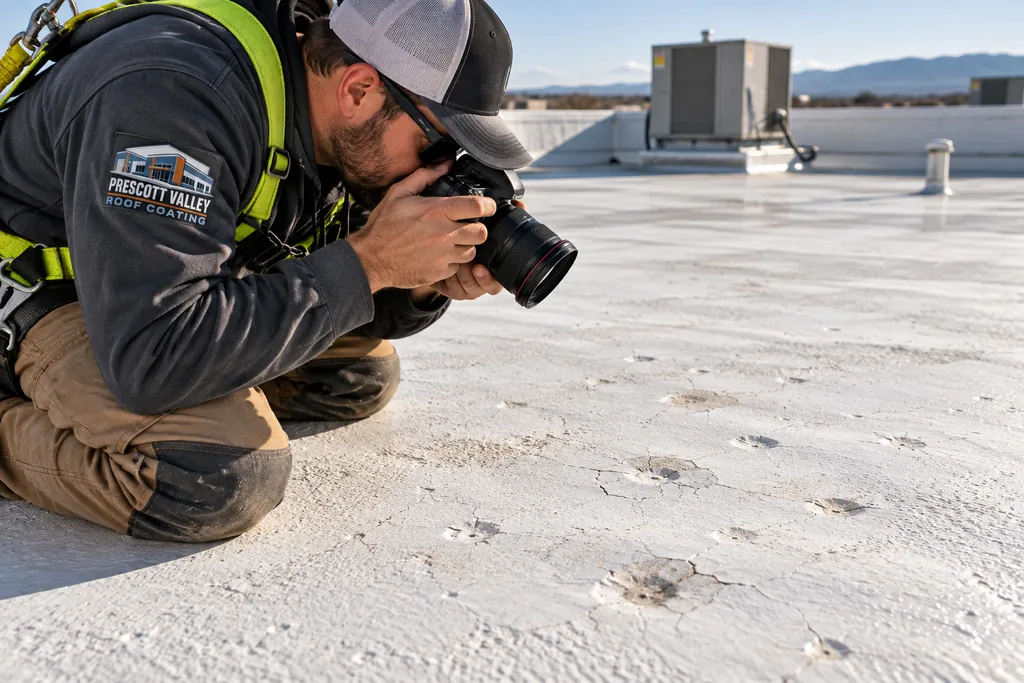
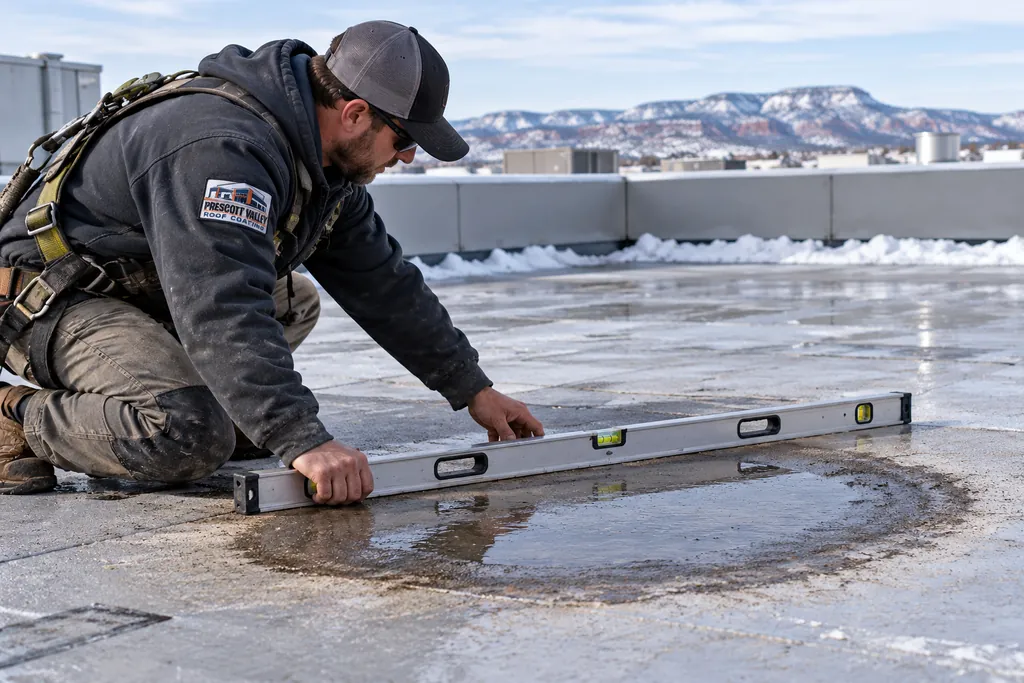
We take moisture readings, cut cores, and on existing foam roofs we document hail bruises and worn topcoat. That tells us whether to spray over the roof or remove it.
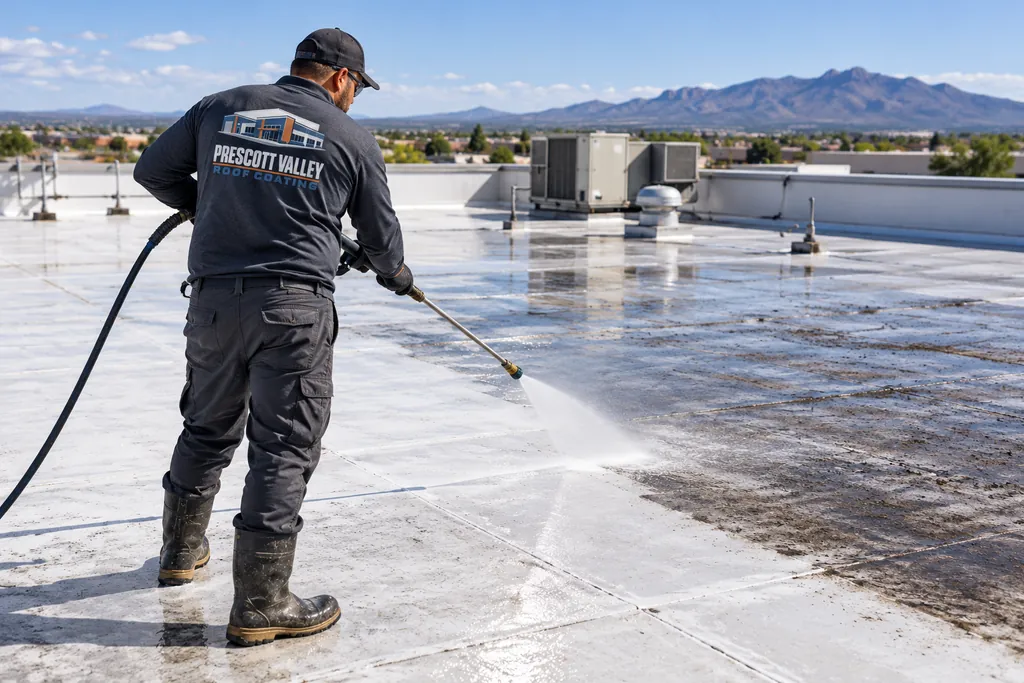
Wet areas are removed, loose gravel is cleared, and the surface is cleaned and dried. Edge metal and penetrations are set so the foam can taper to them.
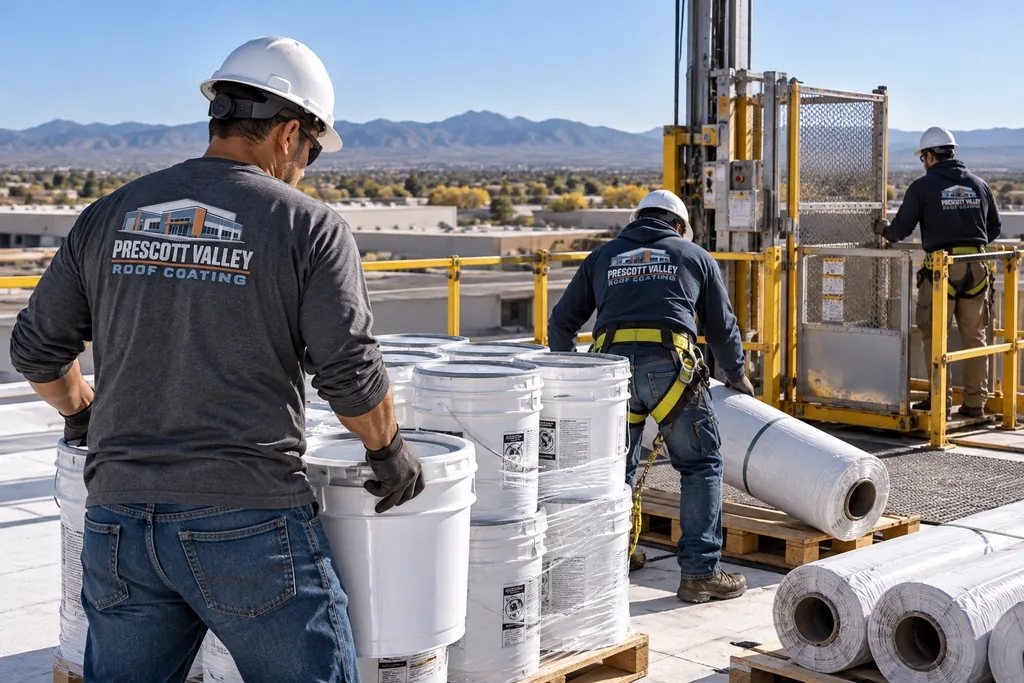
Intakes, windows, and nearby cars are covered or moved, and spraying stops when wind picks up. Foam goes on in passes, with thickness checked by probe as it builds.
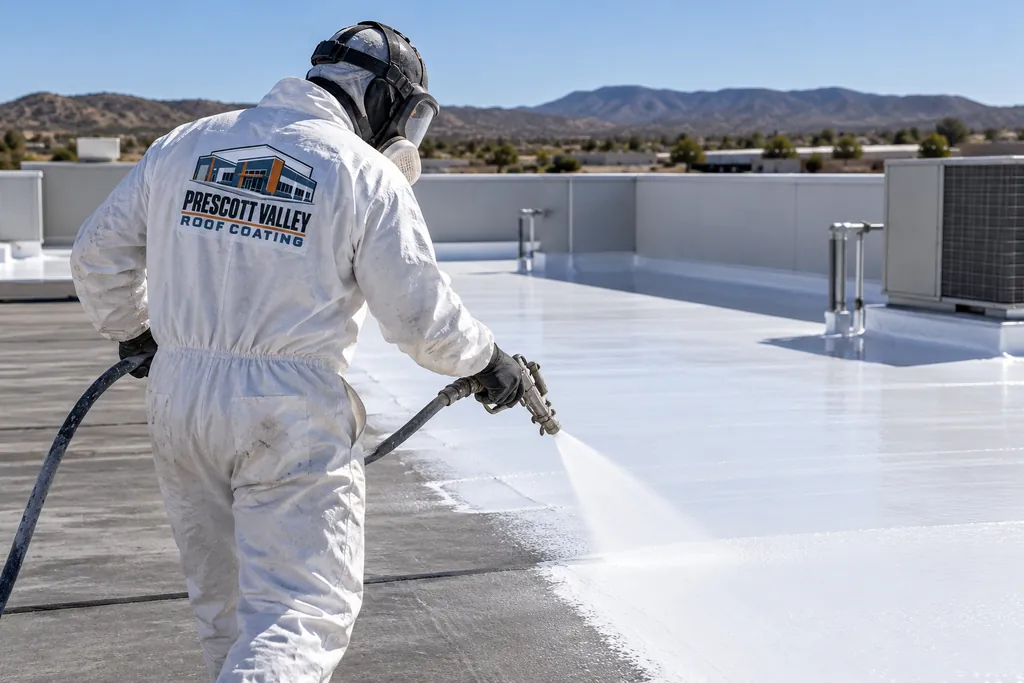
A silicone or acrylic topcoat goes on as soon as the foam allows, often within hours of spraying. Roofs exposed to hail get a thicker coat or a polyurethane layer.
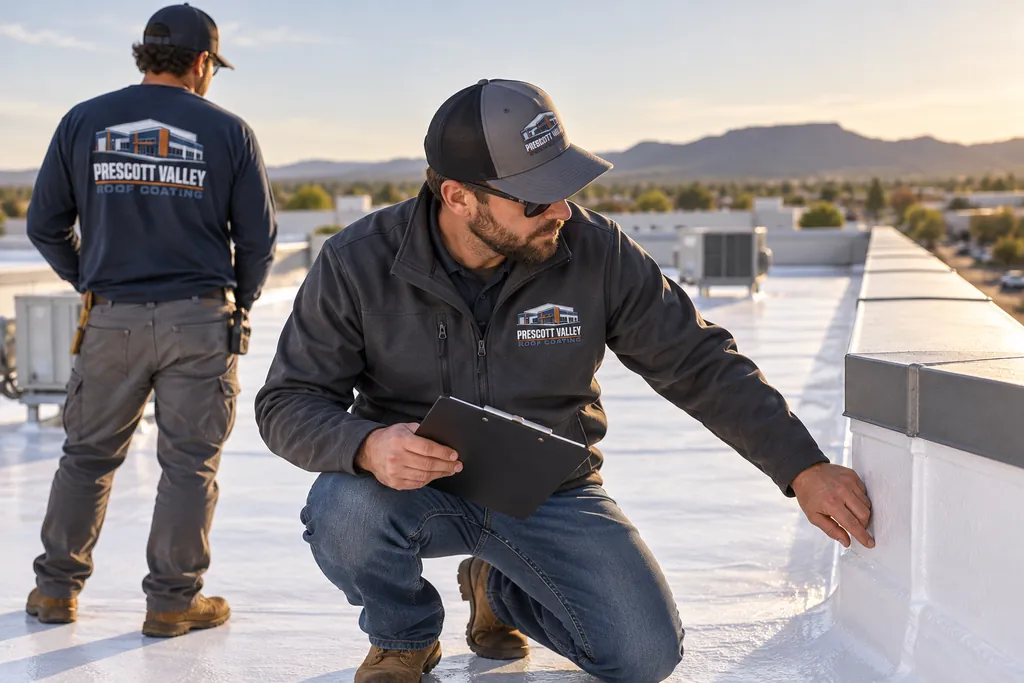
Thickness probes, coverage checks, and photos of the finished edges and curbs close out the job. You keep the readings for your records and the next recoat.
Foam is the right call when a roof needs insulation or reshaping. Otherwise one of these costs less.
If insulation is already adequate and the roof only needs waterproofing, silicone over the existing membrane costs less than foam.
Silicone roof coating details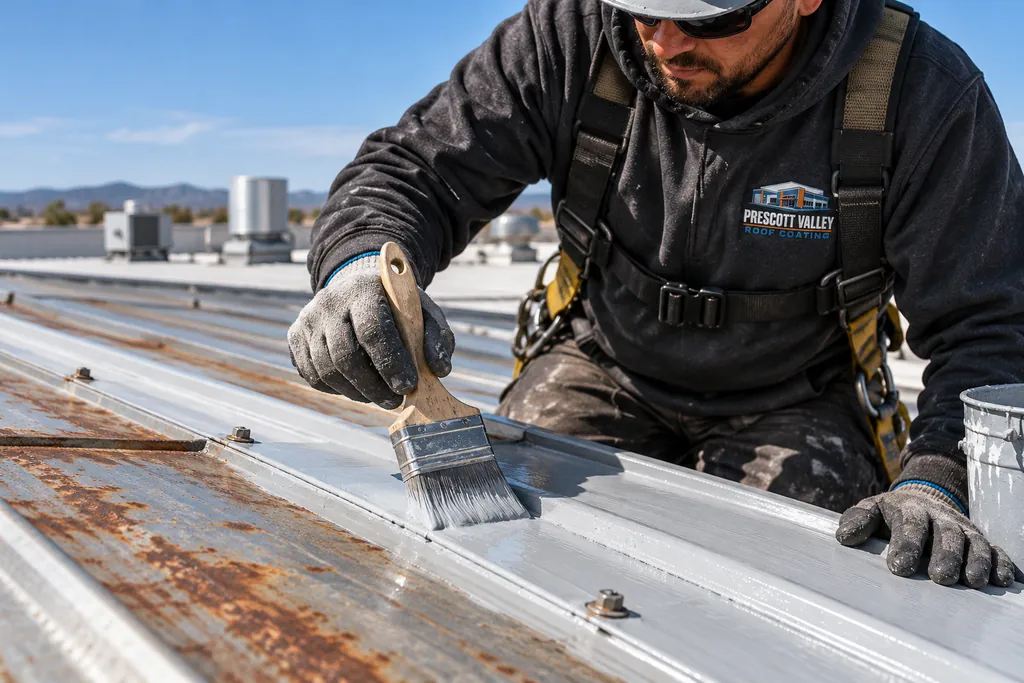
Metal buildings that need waterproofing more than insulation can get a primed metal coating system instead.
Metal roof coating detailsMost asked
Large hail can bruise or puncture a coating, and foam is softer than most roof surfaces, so it shows damage first. Monsoon storms in central Arizona occasionally bring hail, which is why exposed foam roofs get tougher topcoats and thicker applications. Have the roof inspected and photographed promptly after a storm, since small punctures patch easily.
Most commercial foam roofs go on at about an inch and a half or more, built up thicker where low spots need filling. The final thickness depends on insulation goals and drainage, and we record probe readings across the roof.
Foam is sprayed outside on the roof, and rooftop air intakes are shut down or covered during spraying so fumes stay out. We plan the work with your facility manager, and occupants usually notice little more than equipment noise.
Wind carries foam mist, so spraying stops when gusts rise, and parked cars near the roof edge are moved or covered. Afternoon winds and monsoon gust fronts often push spraying into the morning hours.
Plan on a recoat once the topcoat wears thin, which a spring inspection each year will show. Keeping the topcoat intact is what protects the foam, so a timely recoat costs far less than replacing UV-damaged foam.
Yes. Foam over metal panels adds insulation and covers fasteners and laps in one layer. The panels need loose screws replaced and rust treated first, and the building's ventilation is checked for condensation.
Only slightly. Roofing foam weighs a few pounds per cubic foot, so a typical installation adds well under a pound per square foot. That is far lighter than another layer of built-up roofing.
Tell us whether the roof is foam already or a candidate for it, and its rough size. We start with a moisture survey.
Leave a name and number and a roofing contact will call you back.
Or call now: (928) 436-4811